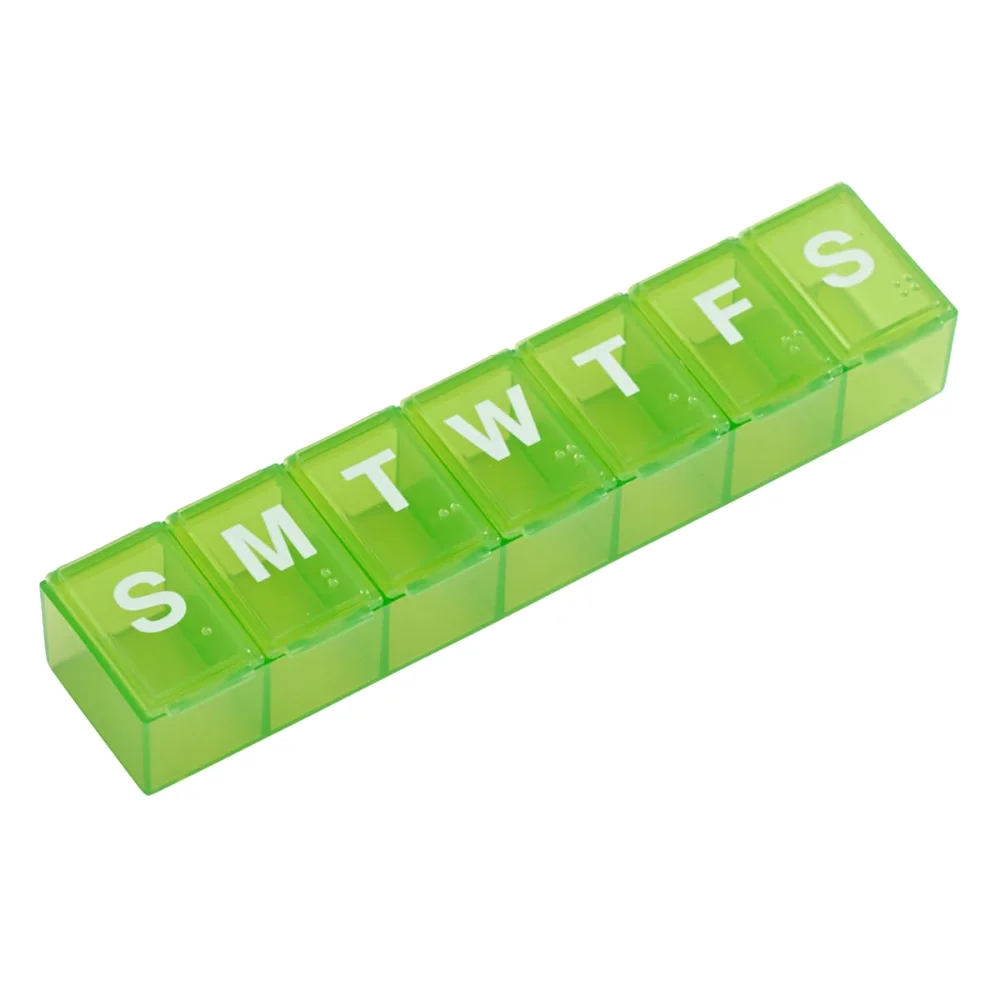
Weekly pill organizers
Weekly 7-Day Pill Organizer, Large
- 7 days
- Large compartments
- 4 colours
4.6 · 32,691 ratings
from $4.49
Official Ezy Dose store
You fill seven lids on Sunday and for the rest of the week the question “did I take it” is answered by looking. Every organizer on this site carries the three numbers that decide it, the days it covers, the doses a day and the size of the compartment, and the cutters, crushers and syringes beside them are marked the way a pharmacist writes.
Start with what people buy most
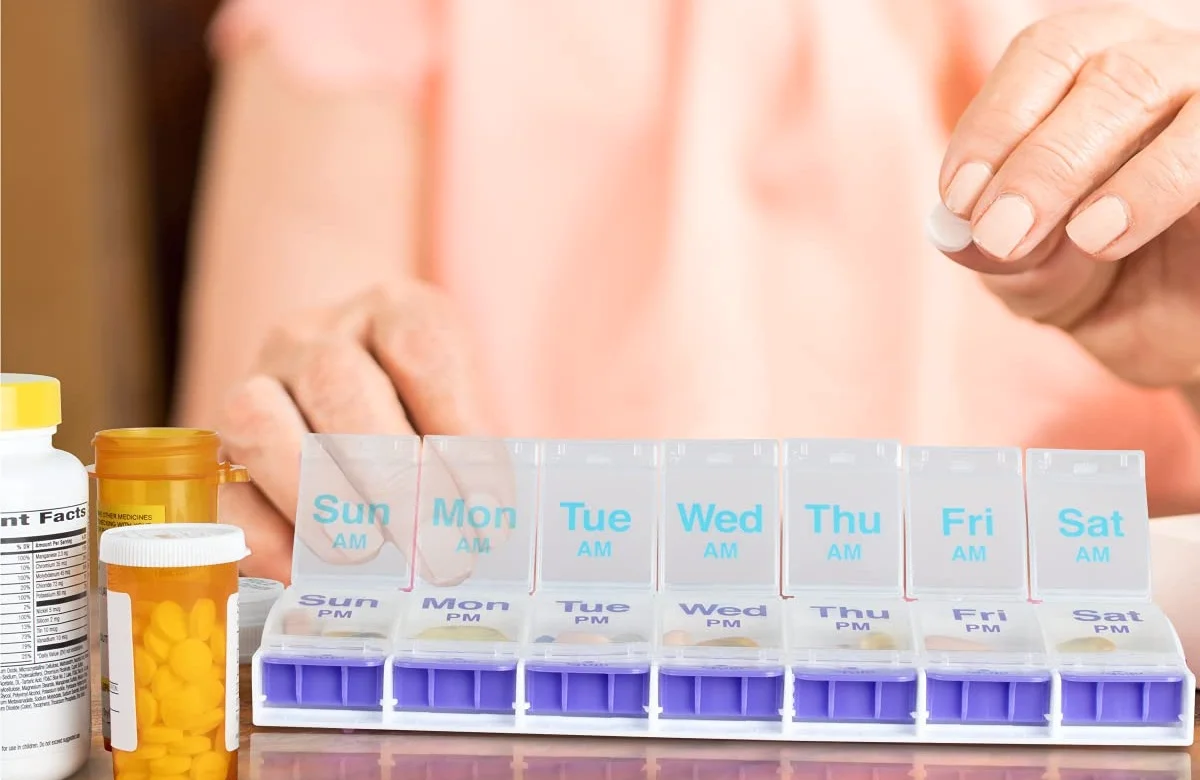
01Eleven shelves
One dose a day is a weekly box. Two is AM/PM. Four is a Medtime tray. A dose that has to be halved is a cutter, one that will not go down whole is a crusher, and a child’s dose in millilitres is a syringe. The shelves are sorted by that, not by price.
02What leaves the shelf first
Dealt down this page in three blocks, with every card showing its days, its doses a day and its size before you click.
Weekly pill organizers
4.6 · 32,691 ratings
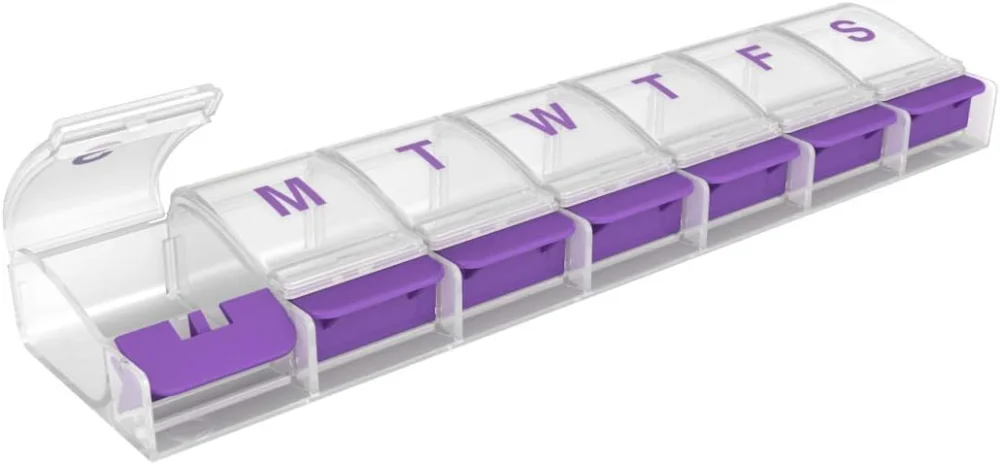
Weekly pill organizers
4.7 · 7,511 ratings
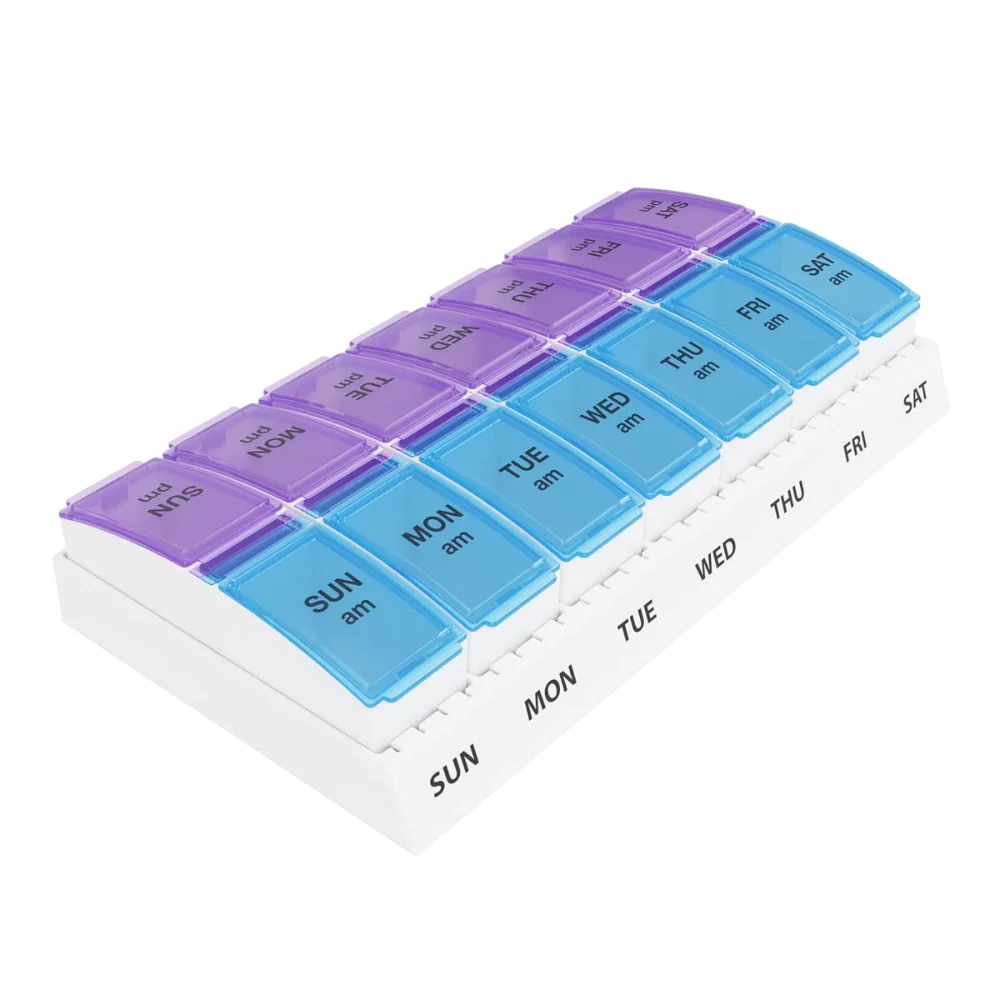
AM/PM pill organizers
4.6 · 52,527 ratings
AM/PM pill organizers
4.3 · 7,507 ratings
Daily and pocket pill cases
4.5 · 14,187 ratings
03What it is made of
Everything that holds a dose here rests on three things: a plastic that washes and does not taint what it holds, a lid that opens for the hand that has to open it, and markings that read by touch as well as by eye.
The organizers, syringes and cups are BPA-free polypropylene. It goes in the top rack, it does not hold a smell, and a clear lid shows whether the compartment is empty without opening it.
Snap lids for a hand that has no trouble. Push buttons for one that does: a press from the side of a thumb, a lid on a spring, and a rounded floor so the tablet rolls to the front.
Every cutter and crusher carries a stainless-steel blade or a stainless grinding face. The blade does not dull on a hard tablet, and it does not rust from the humidity of a bathroom shelf.
Day letters and AM and PM are raised on the lids of the push-button trays, and the syringes and cups are marked in millilitres in a line a thumbnail can find in a dark bedroom.
| What it means at home | Where it matters most | |
|---|---|---|
| Days | Seven for a weekly box, 14, 28 or 31 for the monthly cases, one for a pocket case | How often somebody sits down to fill it |
| Doses a day | One row, two rows for AM/PM, three or four for a Medtime tray | A prescription with more than one line |
| Size | Small to 3XL; Large closes over three tablets and a vitamin, XL over a capsule as well | The first Sunday a fish-oil capsule joins the schedule |
| Lid | Snap, push button, pop-out day, locking latch, combination lock | Stiff hands, a handbag, a house with children |
| Blade | Stainless steel on every cutter and crusher, with or without a shield over it | A drawer shared with other things |
| Barrel | Oral syringes marked in millilitres, 5 and 10 mL, with a bottle adapter | A child’s dose at three in the morning |
Capacities describe aspirin-sized tablets. the Ezy Dose way publishes the days, the doses a day and the size on every product page.
04On a counter, not on a white sweep
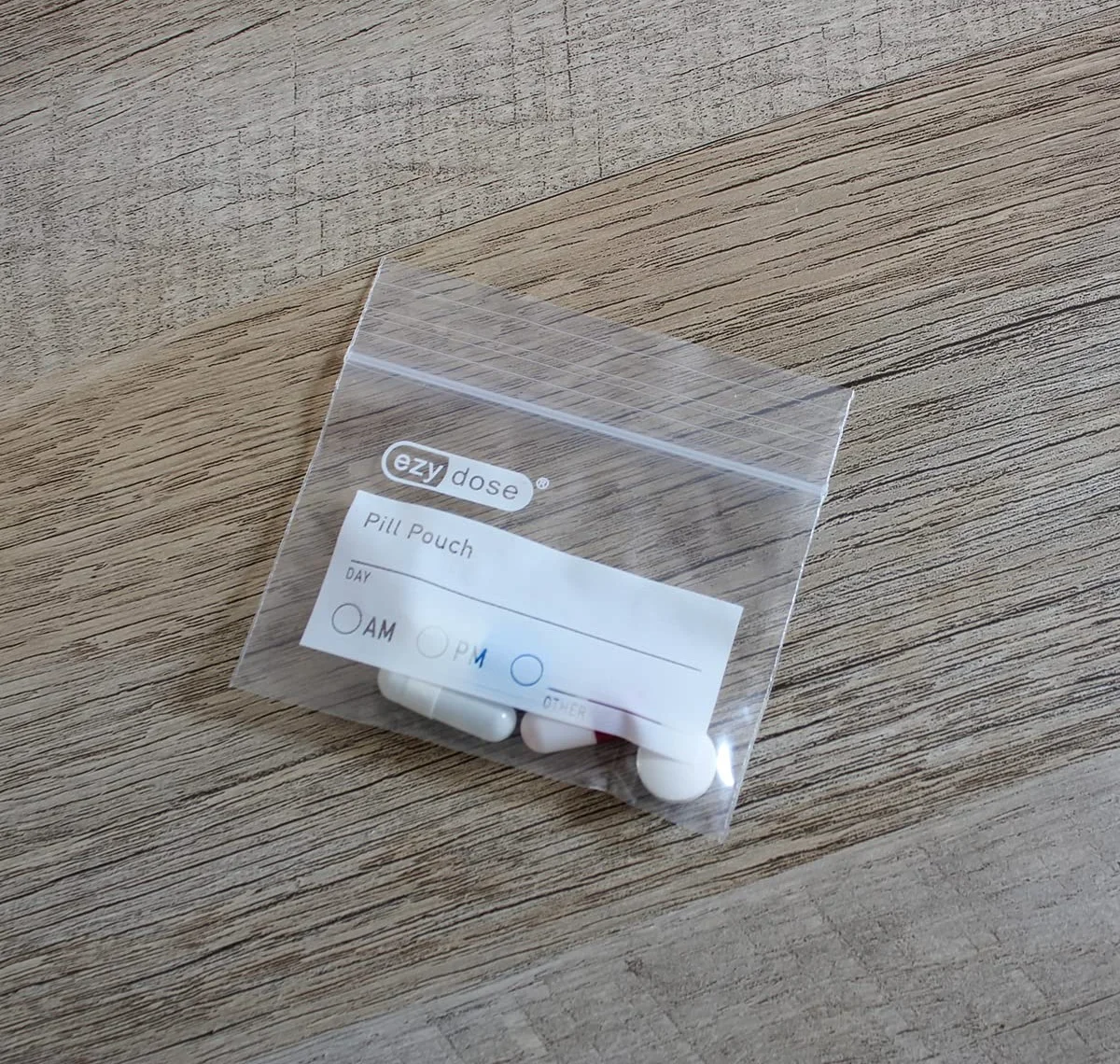
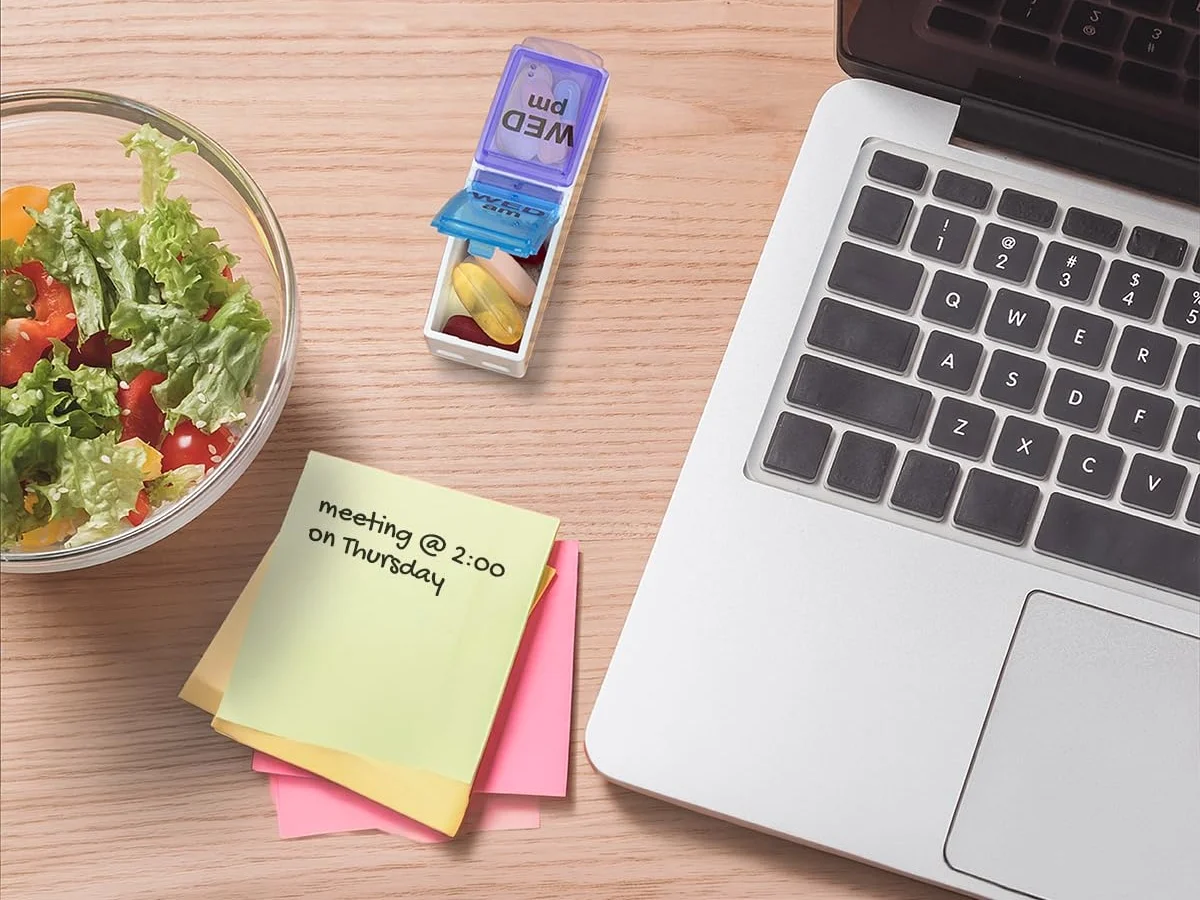
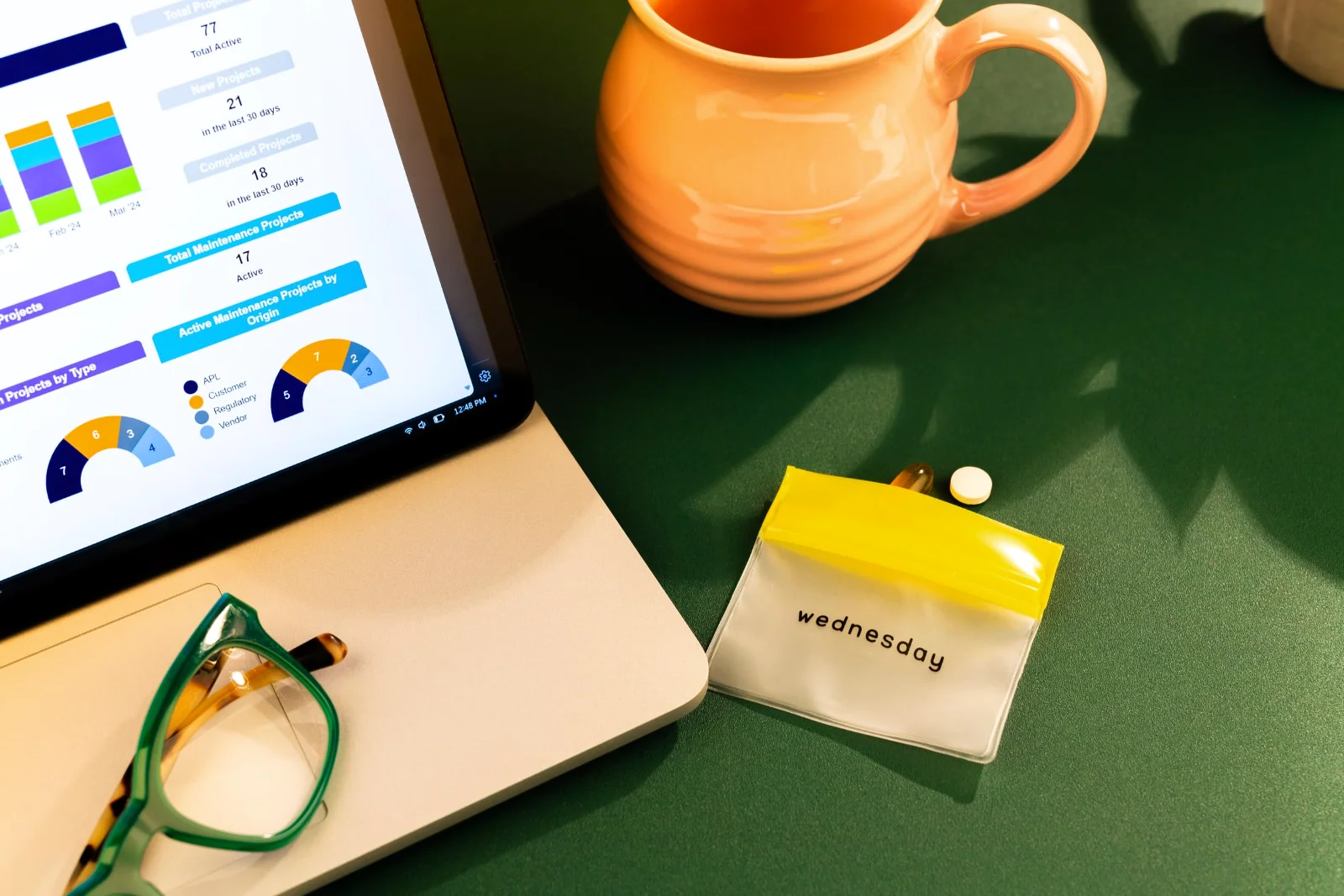
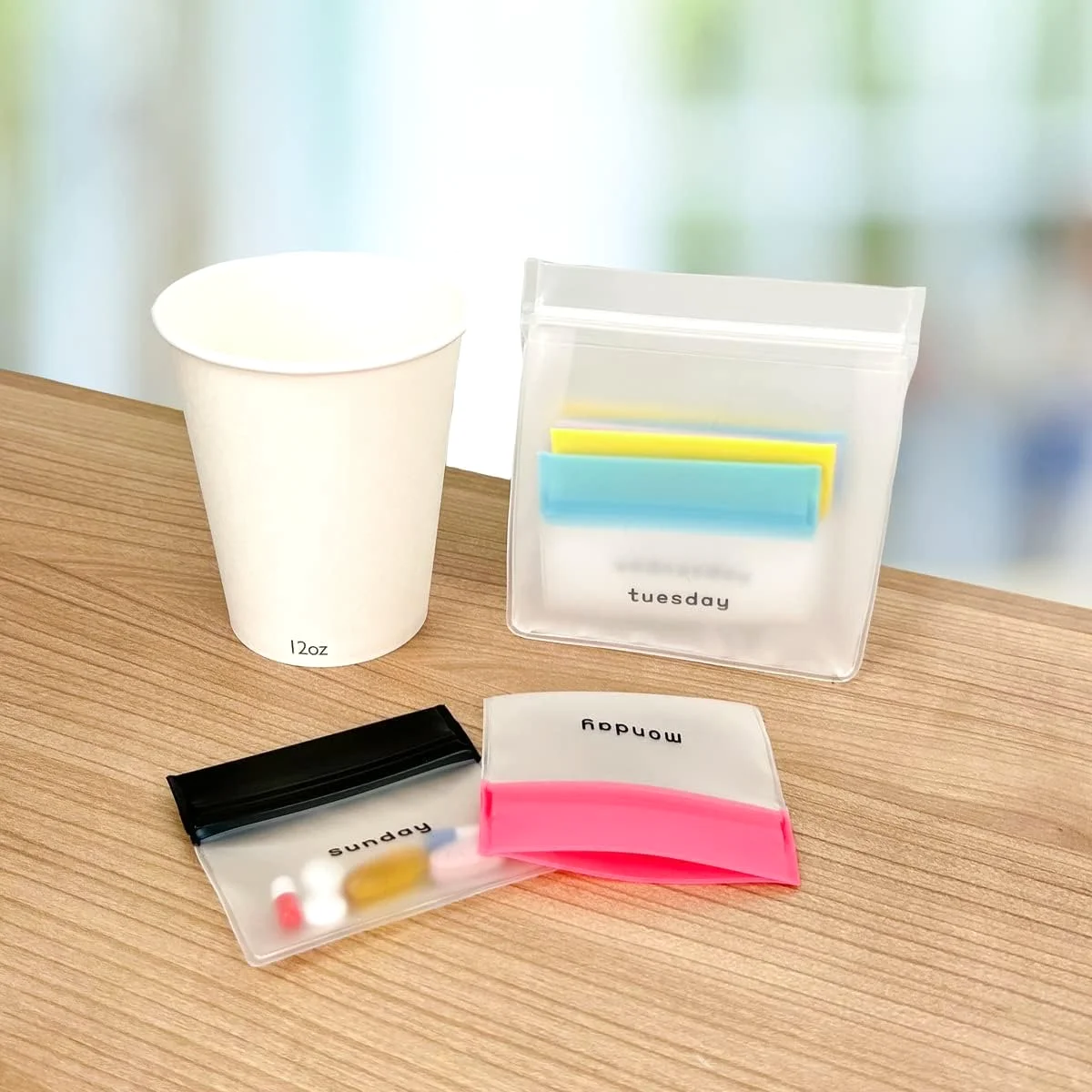
A weekly box with a hand on the Thursday lid, a Medtime tray filled for the week, a cutter with the halves in its tray, a lice comb going through wet hair. What comes out of the box, once it is out.
05For a schedule with more than one line
AM/PM trays with a morning row and an evening row, Medtime planners with four, and the monthly cases somebody else fills on the first. This is the half of the catalogue for a prescription rather than a vitamin.
AM/PM pill organizers
4.6 · 93,978 ratings
Weekly pill organizers
4.4 · 29,919 ratings
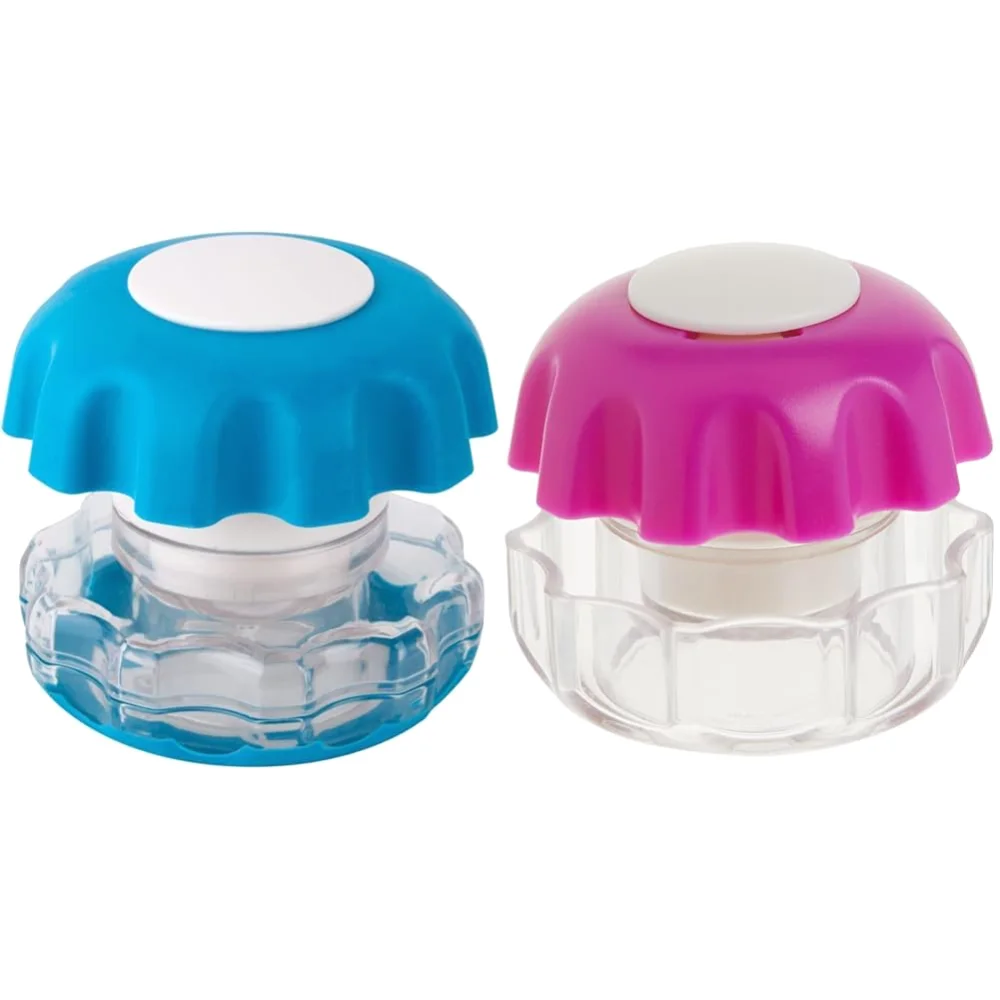
Pill crushers
4.5 · 41 ratings
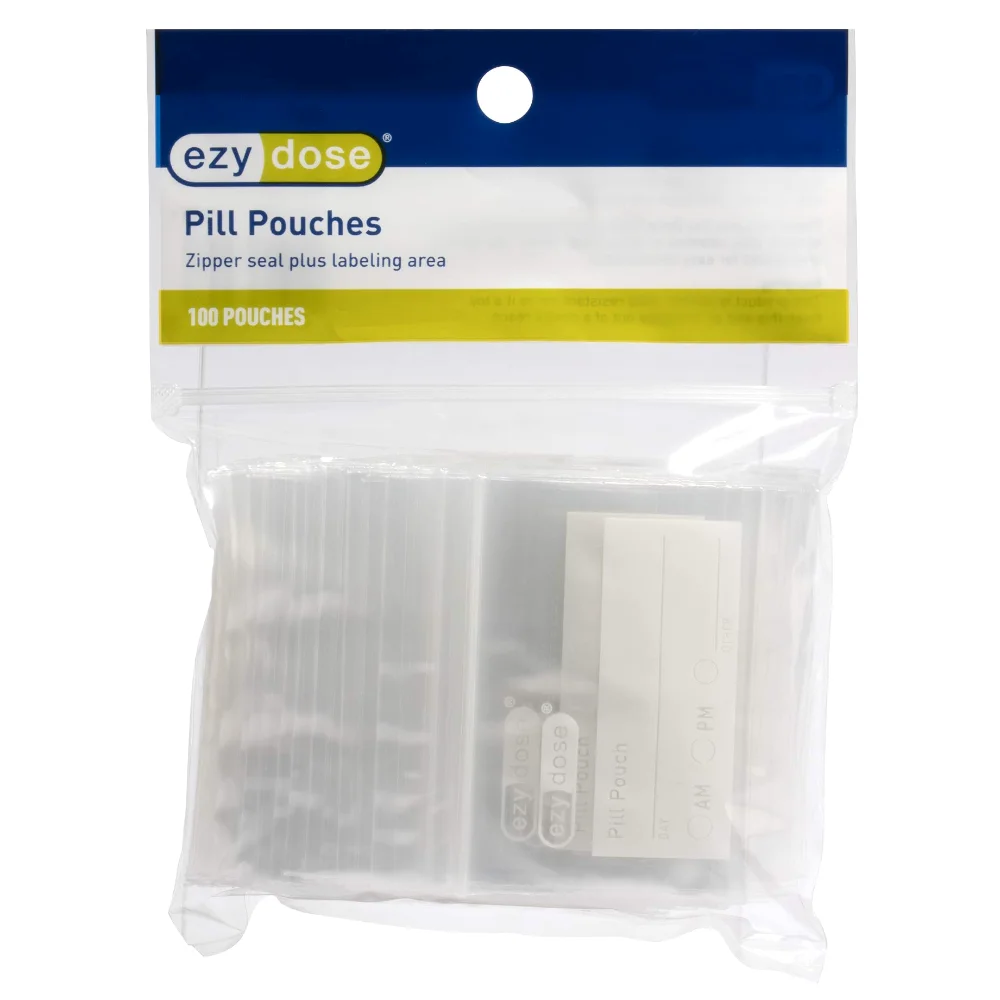
Pill pouches
4.7 · 12,708 ratings
06Forty-two years of the same problem
A dose has to be taken at the right time by a person with other things to think about. Almost everything we have made since 1984 sits somewhere on the line between the bottle on the shelf and the moment the tablet is in a hand.
The first thing we got right was the empty compartment. A bottle cannot tell you whether this morning’s tablet has gone; a box with a lid for each day can, at a glance, from across the kitchen. That is the whole of the weekly organizer, and it has not changed because it did not need to. What has changed is the lid. A snap lid needs a fingernail, and the people who take the most tablets are the people whose fingernails have stopped cooperating, so the push button came in: a press from the side of a thumb, a lid that rises on a spring, and a compartment floor rounded so the tablet rolls forward rather than sitting in a corner. The Arthritis Foundation tested that line and put its Ease of Use mark on it.
The second thing took longer, and it is depth. A compartment sized for three aspirin is useless the first Sunday a fish-oil capsule joins the schedule, so the line runs six sizes deep, from a Small that fits a shirt pocket to a 3XL that takes sixty aspirin-sized tablets in one slot. A Large is where most people land. Two rows for a morning and an evening dose, four for a Medtime tray, and a 31-day case for the house where a daughter fills a month at a time, all sit on the same idea of one dose, one lid.
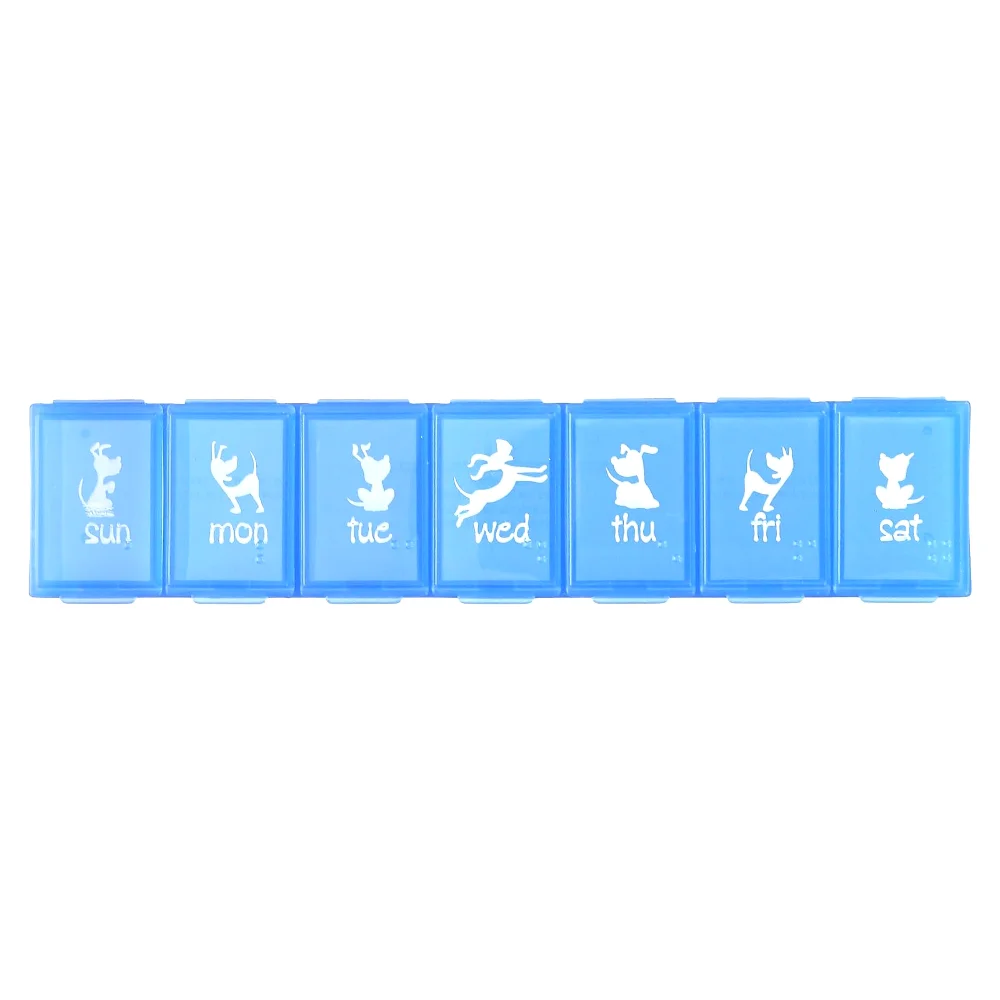
What we have not done is spread far from that idea. Everything at Ezy Dose still answers to the same moment: the cutter that halves a scored tablet cleanly, the crusher that turns one to powder for a spoonful of applesauce, the syringe whose barrel is marked in the millilitres the pharmacist wrote, the pouch with a white strip to write a name on. Even the shelf for cats and dogs is the weekly box with a paw on the lid.
Capacities describe aspirin-sized tablets. A multivitamin takes the room of three or four, a fish-oil capsule of five or six, and the honest test is whether the lid closes cleanly over one day of everything. When it does not, the next size up is the answer, not a firmer press.
07What you are choosing between
People manage a schedule with the bottle, a phone alarm, a pharmacy blister pack or a notebook before they buy a box with lids. Two rows below go against us: a box is not child-resistant, and it has to be filled by somebody.
| Ezy Dose organizer | The bottle itself | Phone alarm | Pharmacy blister pack | A written chart | |
|---|---|---|---|---|---|
| Shows whether today is taken | Yes: the compartment is empty | No | No, only that the alarm rang | Yes, by the burst blister | Only if somebody ticks it |
| Handles two doses a day | AM/PM and Medtime trays | Same bottle twice | Two alarms | If the pharmacy packs it that way | Two columns |
| Travels | Pop-out days, pouches, pocket cases | The whole bottle | Yes | A strip torn off | Yes |
| Child-resistant | No, except the lockbox | Yes, with the cap on | Not applicable | Partly | Not applicable |
| Who fills it | You, or someone for you, once a week or month | Nobody | Nobody | The pharmacy | You, every day |
| What it costs here | From a pocket case to a Medtime tray; the range is printed under the table | Nothing | Nothing | A pharmacy fee | A pencil |
| The catch | It is only as right as the person who filled it | Cannot show a missed dose | Rings whether or not you took it | Fixed by the pharmacy, not by you | Falls behind by Wednesday |
Prices are the range across this catalogue at our last update, $1.43 to $62.39; the other four columns describe the alternatives rather than any one product.
08The part that is not ours to decide
Four things on this site answer to public health guidance rather than to anything we could put on a box. Those sources are linked here rather than paraphrased into a promise.
FDA says tablet splitting is done only under a healthcare professional’s supervision, that approval is printed in the HOW SUPPLIED section of the label, and that most sustained-, controlled- or timed-release medicines are not meant for it. Split one tablet at a time; a split tablet loses potency to heat and moisture.
US Food and Drug Administration, read September 2, 2026The NHS pharmacy service is plain: crush a modified-release tablet and all the drug is released at once, and enteric-coated and gastro-resistant tablets are not suitable for crushing at all. Film-coated and chewable tablets usually are. The check is with a pharmacist, not with the shape of the tablet.
NHS Specialist Pharmacy Service, read September 2, 2026The American Academy of Pediatrics asks parents never to measure medicine with a household spoon and to use the dosing tool that came with the medicine, marked in millilitres. An NIH-funded study found parents who thought in teaspoons had twice the odds of a dosing error.
American Academy of Pediatrics, read September 2, 2026CDC asks that medicines, vitamins and gummies be put away every time, somewhere children cannot reach or see, with the child-resistant cap relocked each time and treated as a delay rather than a guarantee. Poison Help is 800-222-1222, and it belongs in every phone before it is needed.
US Centers for Disease Control and Prevention, read September 2, 2026This section is general information about medication tools, not medical advice about a particular medicine, dose or person. Nothing here says whether your tablet may be split or crushed, how much to give, or what to do about a missed dose: those questions belong to the pharmacist who filled the prescription and the doctor who wrote it. If you have a specific concern, take it to a healthcare professional or a public health authority rather than to a catalogue.
09The rest of the medicine cabinet
A blade for a scored tablet, a cup that grinds one to powder, a barrel marked in millilitres, a bulb for a nose a baby cannot blow. None of it has a lid with a day on it.
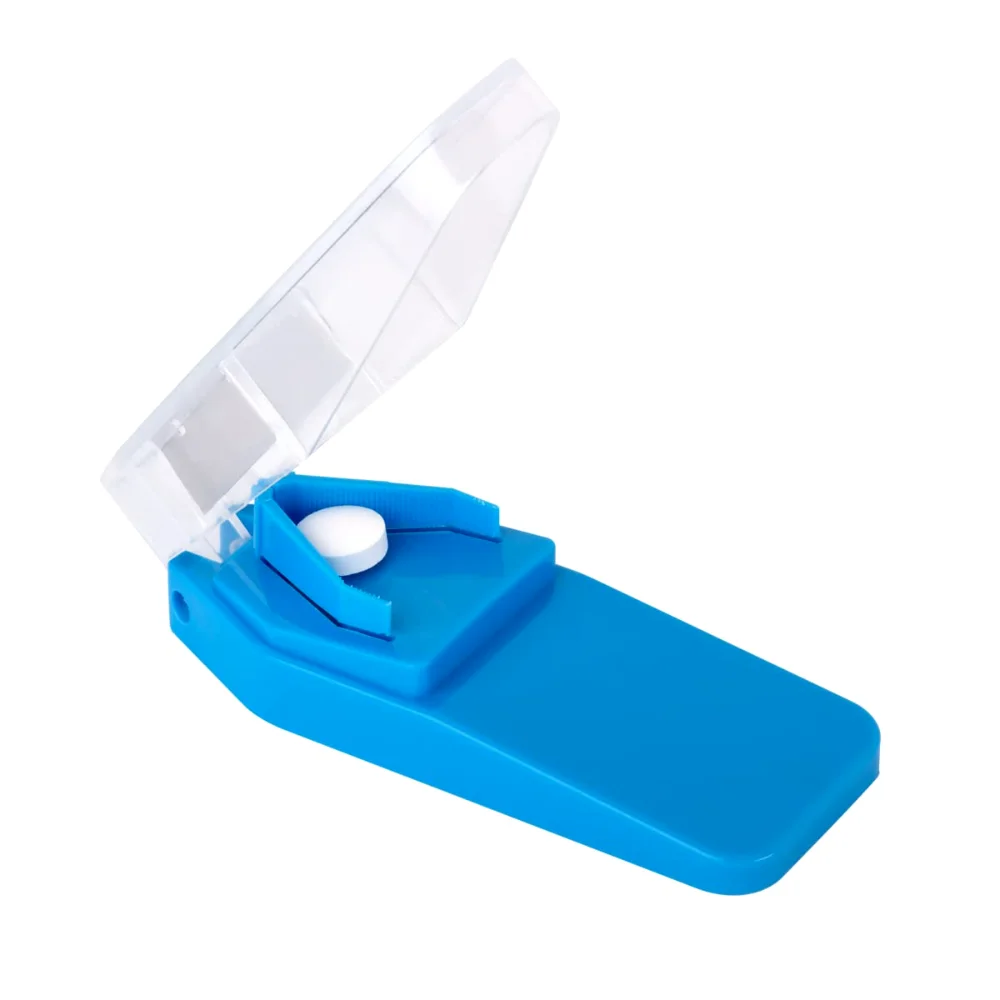
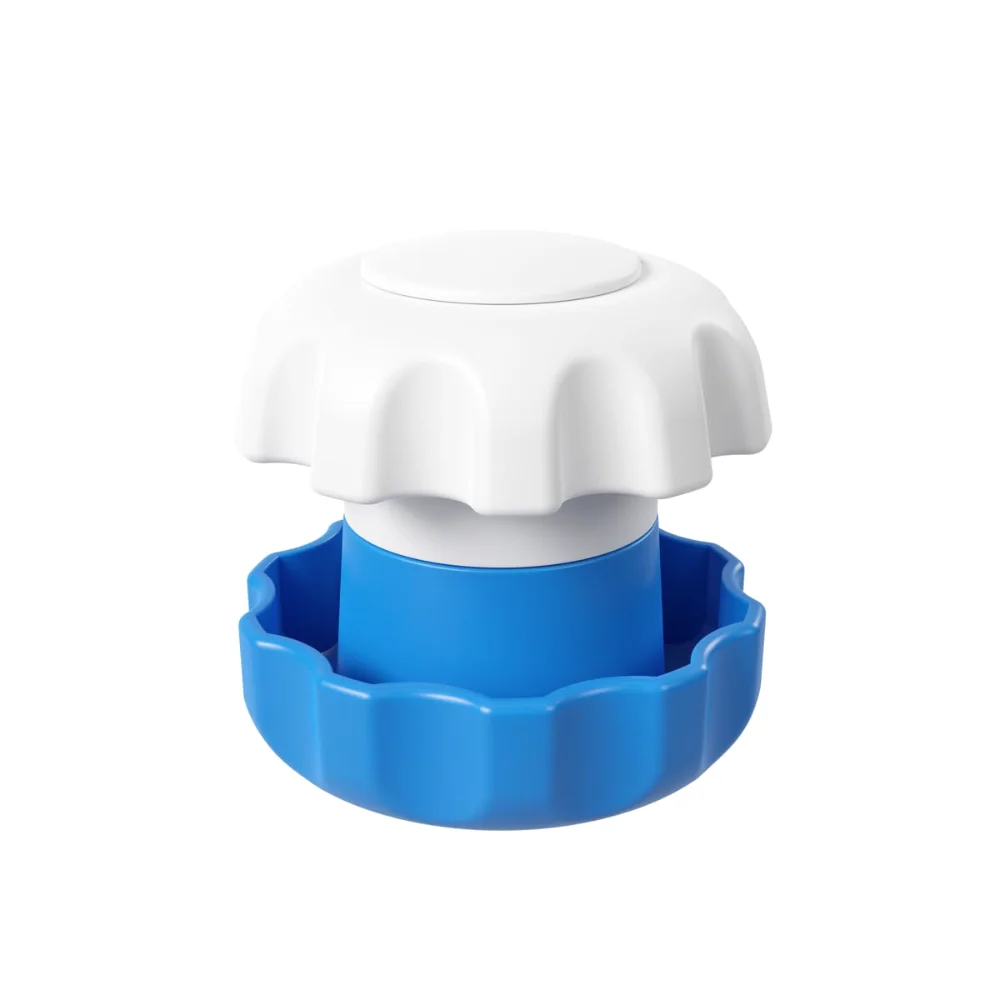
Pill crushers
4.4 · 34,094 ratings
Pet pill organizers
4.4 · 133 ratings
10What Ezy Dose is
Every box, blade and barrel here answers to the moment a tablet is in a hand. Read the catalogue by the schedule on your fridge and the range sorts itself.
Start with the number of lines on the schedule. A single tablet at breakfast is a weekly box: seven lids, filled on Sunday, an empty compartment each morning as the record. A tablet at breakfast and another at bedtime is an AM/PM box, where the two rows are moulded in different colours so the night dose never comes out of a morning lid. Three or four doses is a Medtime tray, with a row for each and daily strips that lift out to travel. A month filled in one sitting, usually by a daughter or a carer, is the 31-day case numbered by date.
Then count what goes into one dose, because the depth of the compartment is where people go wrong. Two or three small tablets fit a Medium. A multivitamin takes a Large, which is the size most of the range is bought in. The first Sunday a fish-oil capsule joins the schedule the lid on a Large stops closing cleanly, and XL or 2XL is the honest answer; the 3XL holds sixty aspirin-sized tablets a slot and closes over anything a pharmacist hands out for a day.
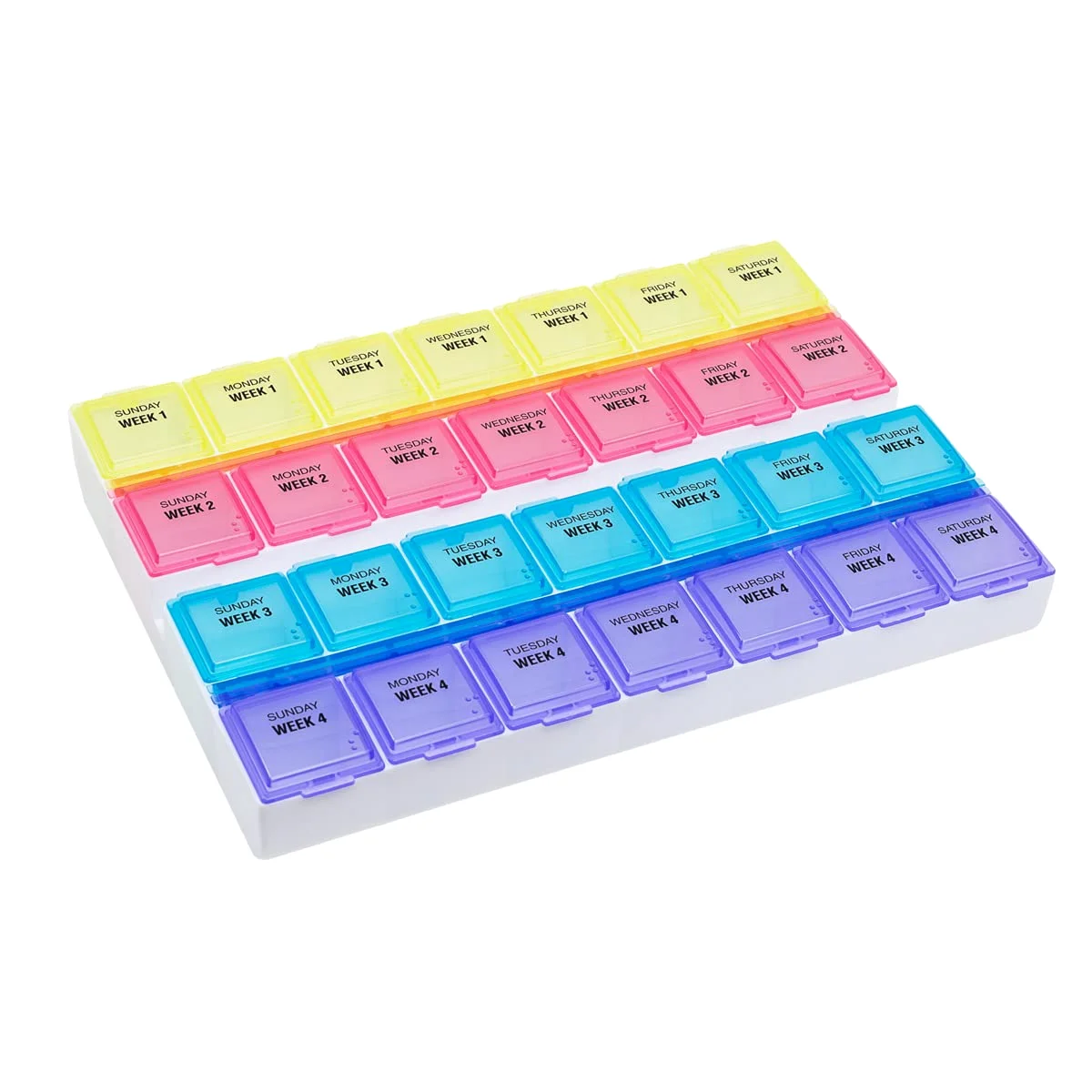
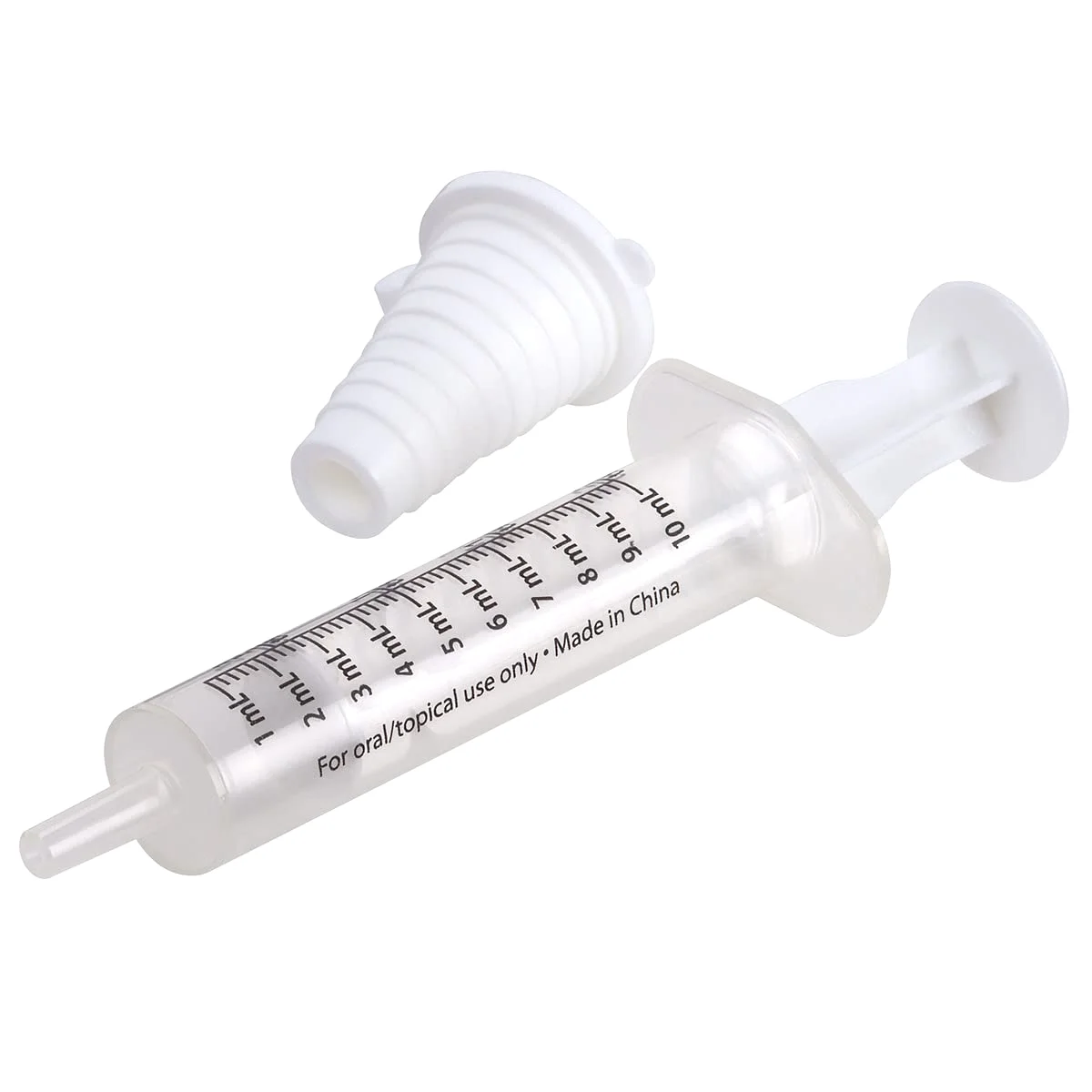
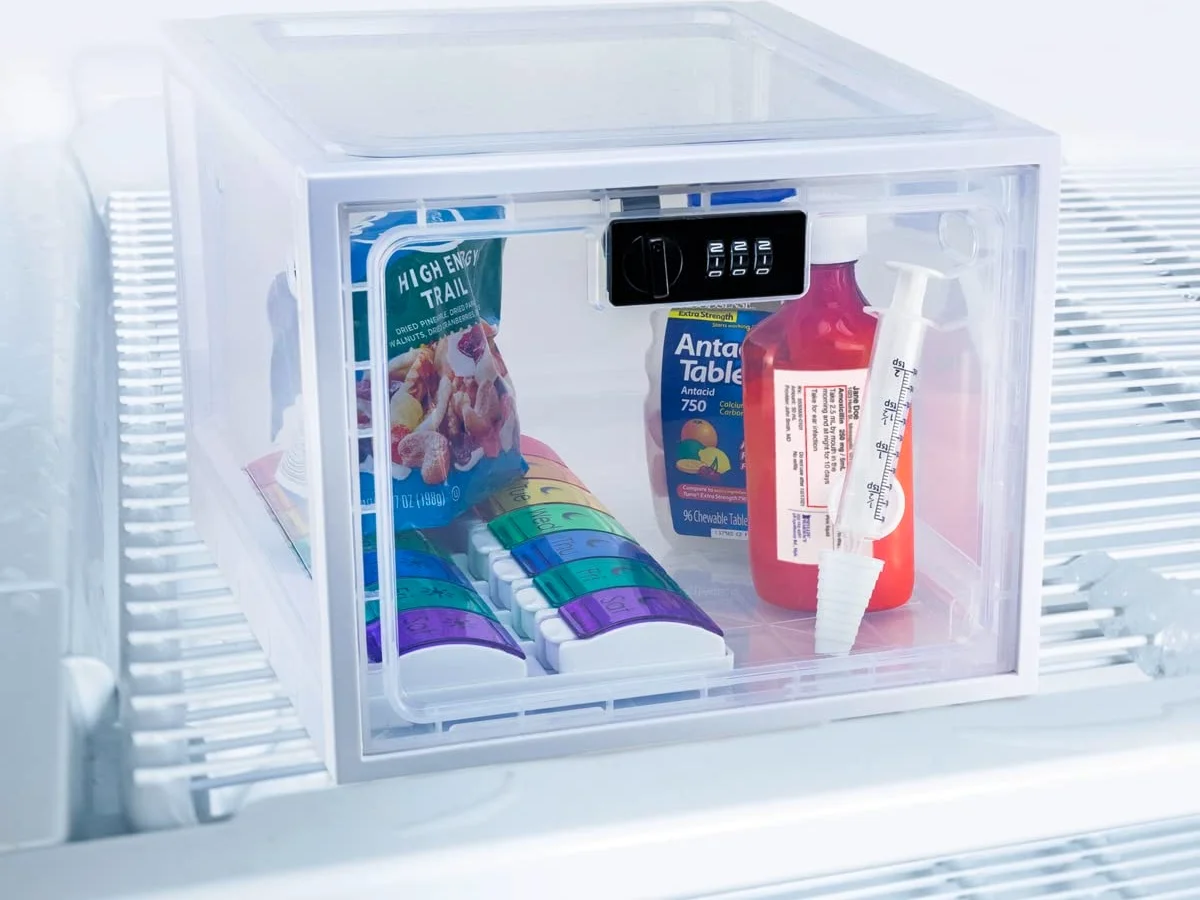
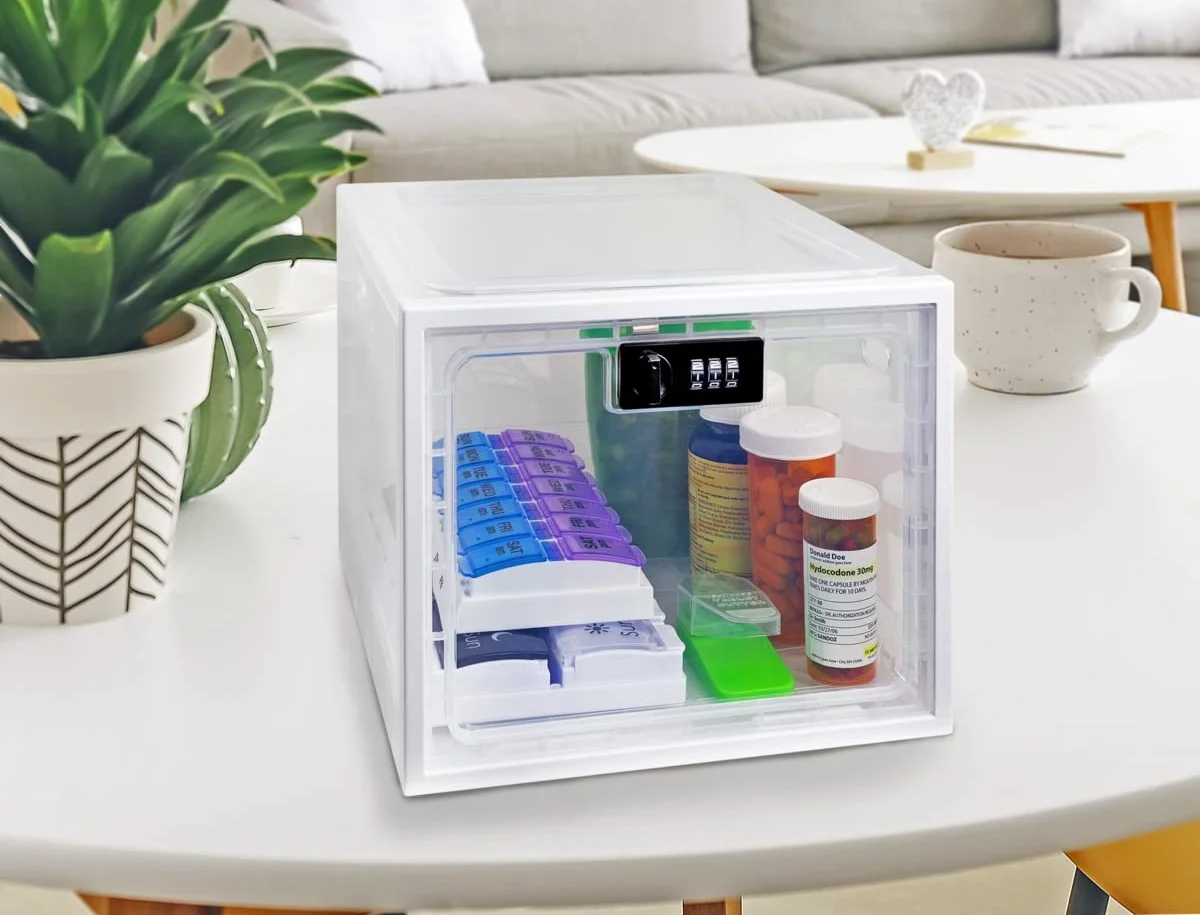
The lid is the third choice, and it depends on the hand. A snap lid opens with a fingernail and costs the least. A push button opens under the side of a thumb and the lid rises on a spring, which is the line the Arthritis Foundation has certified as Ease of Use, and the rounded floor of those compartments tips a tablet toward your fingers. A locking latch stays shut in a handbag; a combination lock on the lockbox is for the bottles in a house with children.
Everything else on the site is a tool for the same moment. The cutter halves a scored tablet once the pharmacist has said it may be halved; the crusher grinds one to powder for a spoonful of applesauce once the pharmacist has said it may be ground. The oral syringe is marked in the millilitres a child’s dose is written in, and the bulb aspirator, the lice comb and the pill shooter for a cat are the tools for the nights that were not on any schedule.
| Your schedule | The box | The size | The lid |
|---|---|---|---|
| One dose a day, you fill it | Weekly, seven lids | Medium for tablets, Large with a vitamin | Snap, or push button for stiff hands |
| Morning and evening | AM/PM, two coloured rows | Large, XL once a capsule joins | Push button; pop-out days to travel |
| Three or four doses a day | Medtime tray, a row per dose | Large to 3XL | Push button, daily strips lift out |
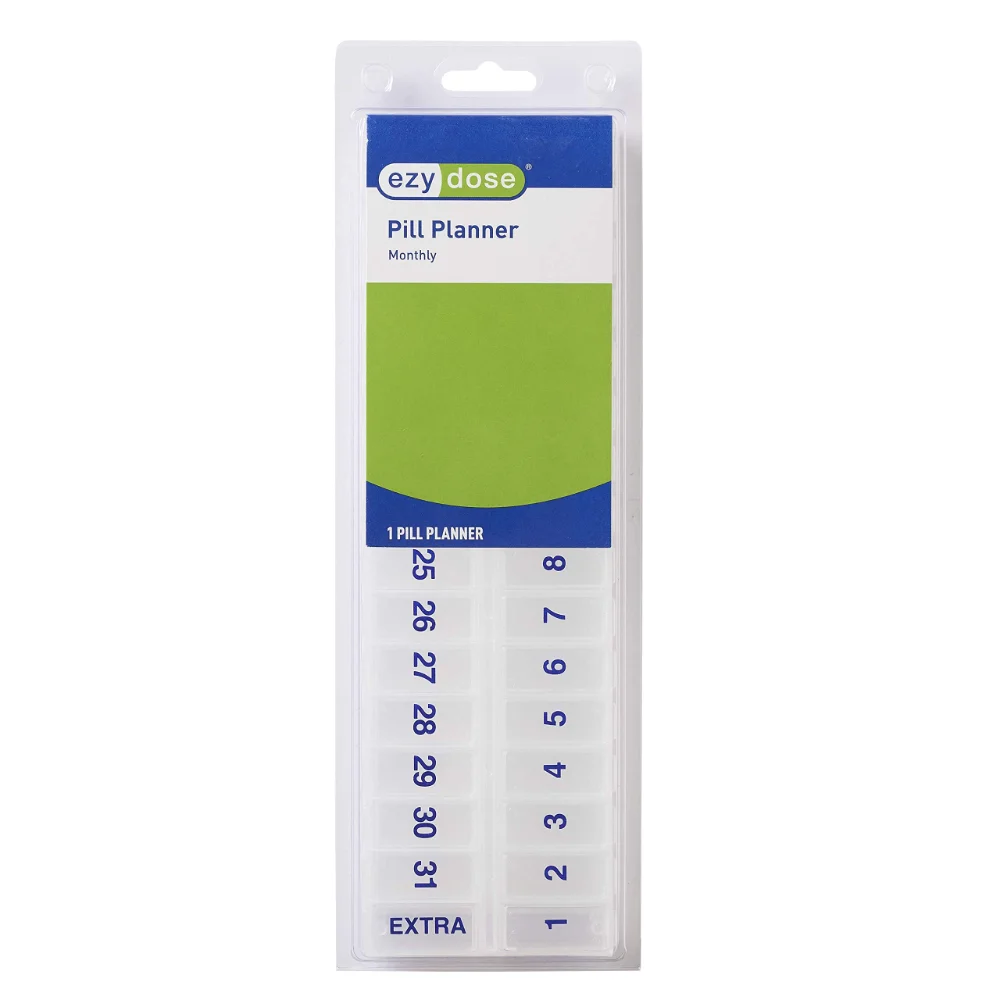
| A month, filled by someone else | 31-day case numbered by date | Large throughout | Snap lids, read across the room |
| A day out of the house | Pocket case, pouch, pop-out day | One dose | Snap; a gasket on the moisture-proof cases |
| A house with small children | The organizer, plus a lockbox for the bottles | Any | Combination lock on the box the bottles live in |
The longer answer to “what is this brand” lives on Read what Ezy Dose makes and who it is for.
11Straight to a line
The largest get a paragraph here; the rest are one click away, and every one of those pages carries the whole line with its prices, sizes and colourways.
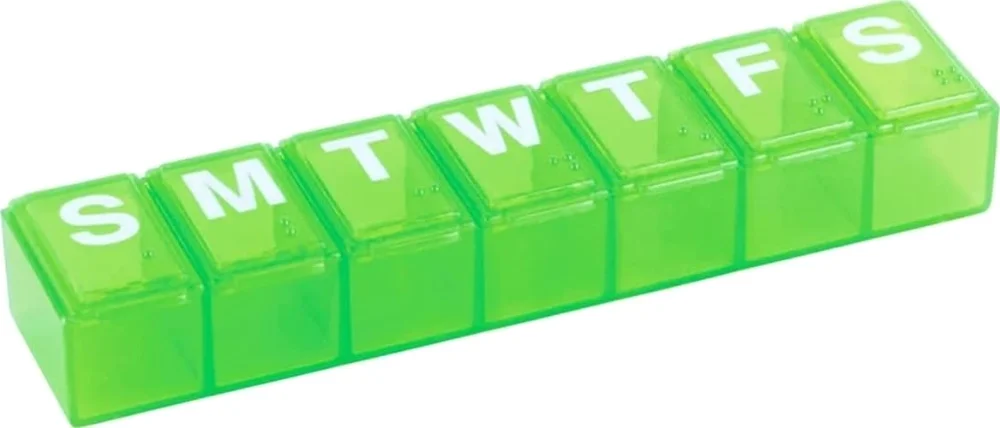
The plain seven-day box is where most people start: one lid a day, filled on Sunday, and an empty compartment every morning as the record. Six depths, from a Small that fits a shirt pocket to a 3XL that swallows a multivitamin and four tablets in one slot, in blue, clear, rainbow, pink, black and purple.
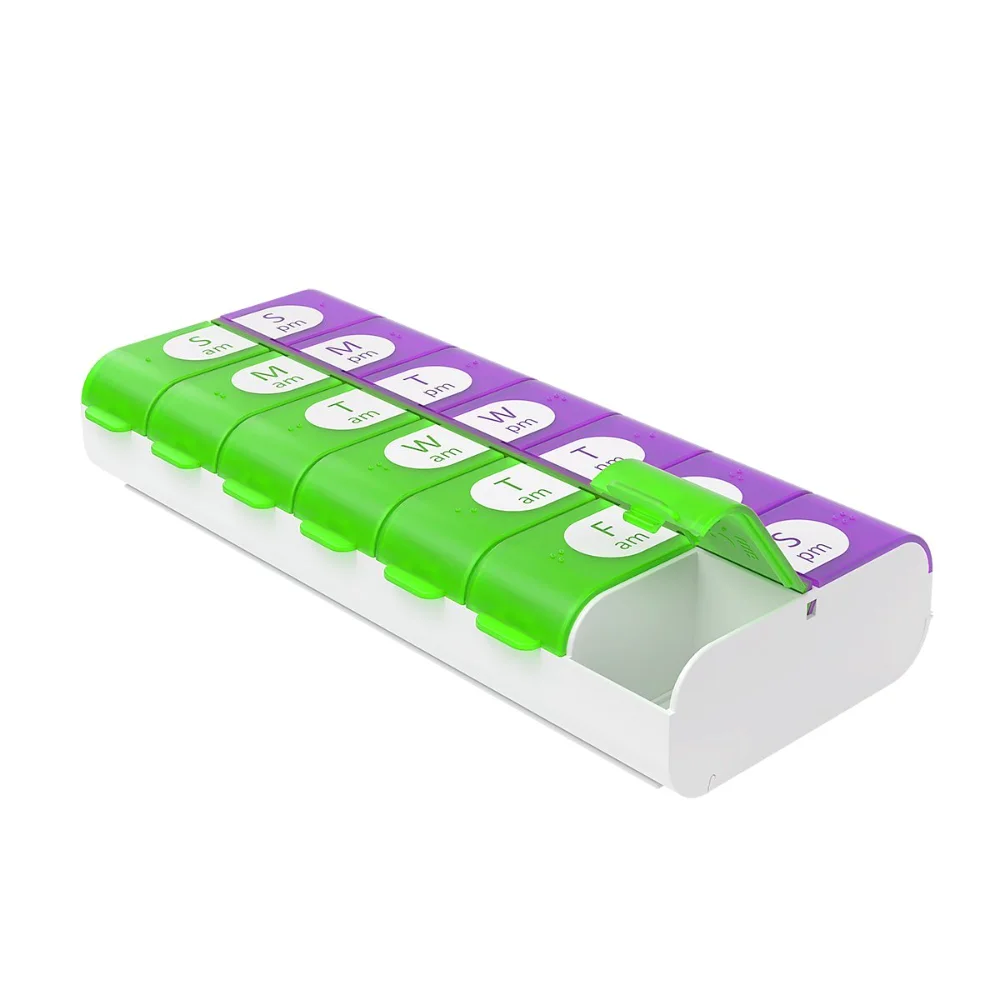
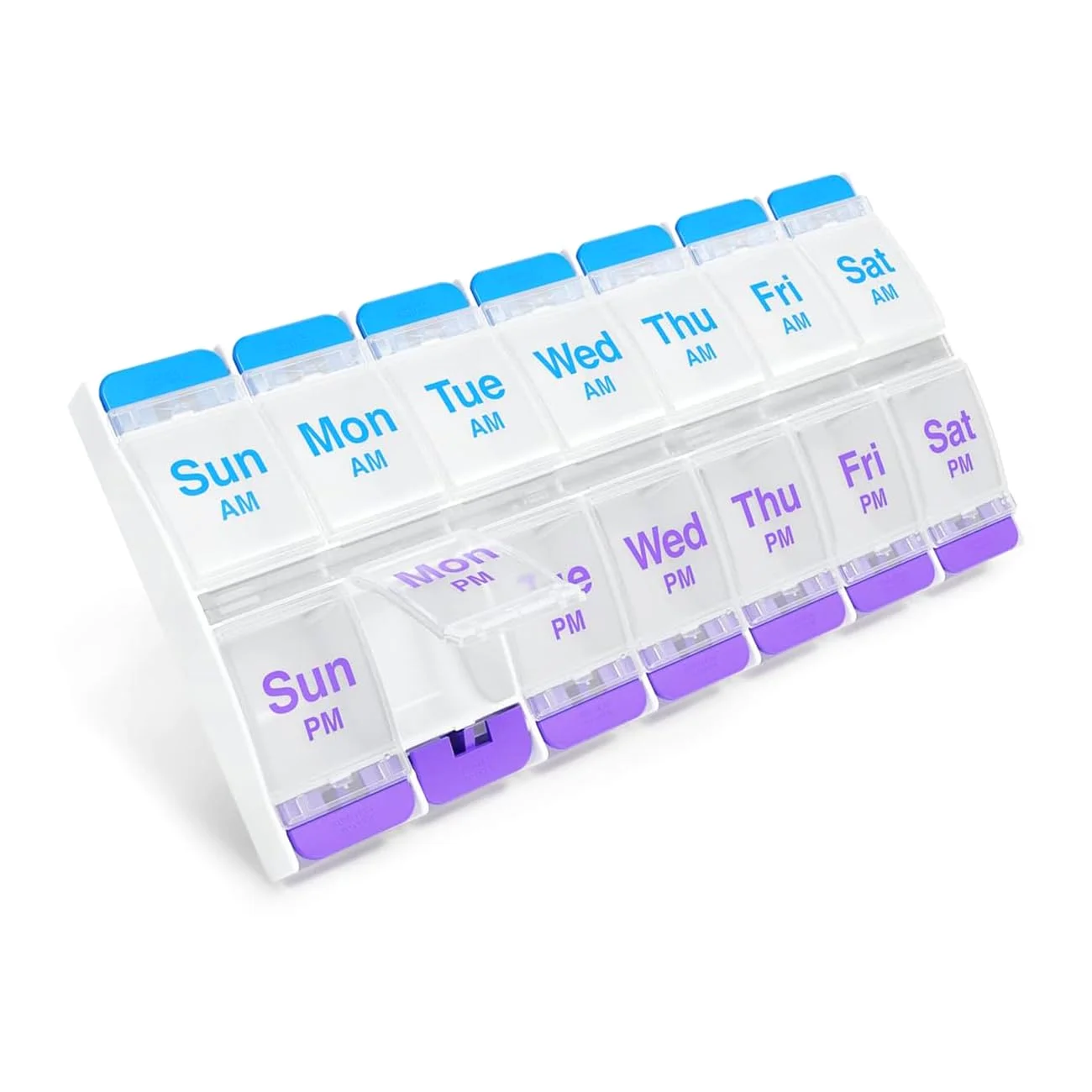
Two doses a day is two rows: seven blue lids for the morning and seven purple for the night, so the tablet that goes with breakfast never comes out of the bedtime lid. The most reviewed thing we make, in Small through 3XL, with push buttons that open under a thumb.
A lid that opens under the side of a thumb instead of a fingernail, on weekly, AM/PM and four-a-day trays alike. This is the line the Arthritis Foundation has certified as Ease of Use, and the one a stiff hand reaches for at seven in the morning.
Seven small boxes in a tray, each one a day with its own lid, that lift out one at a time: fill the tray on Sunday and pocket the day you are out. In one-dose, AM/PM and four-a-day versions.
Four rows across seven days: breakfast, noon, evening and bedtime, each with its own lid, on trays whose daily strips lift out to travel. The Medtime planner is the box for a schedule that would not fit on a weekly.
For the slot that has to close over a fish-oil capsule, a multivitamin and four tablets at once: XL, 2XL and 3XL trays in weekly, AM/PM and four-a-day layouts, up to sixty aspirin-sized tablets a compartment.
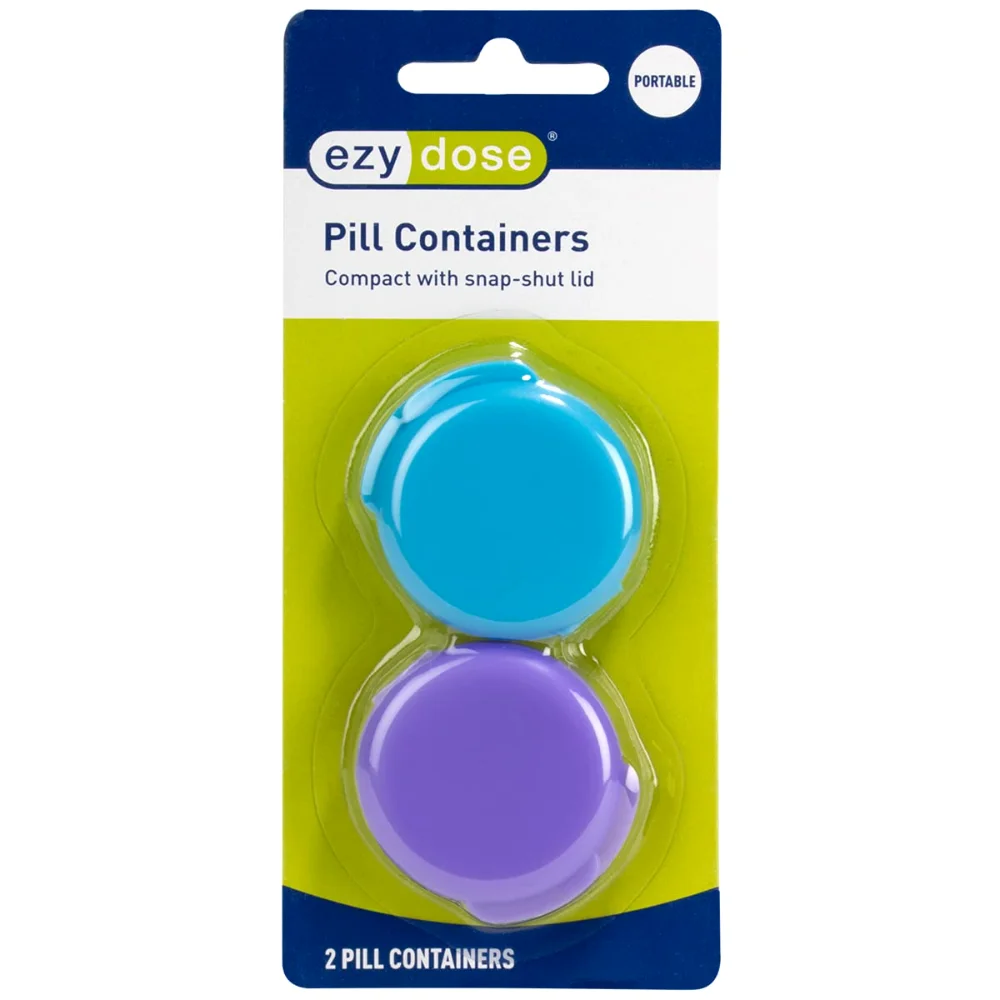
The weekly box on the counter does not go to work; these do. A round pocket pharmacy that holds a day and rides in a jacket, moisture-proof cases with a gasket for a beach bag, and a round compact with a mirror in the lid that reads as a compact.
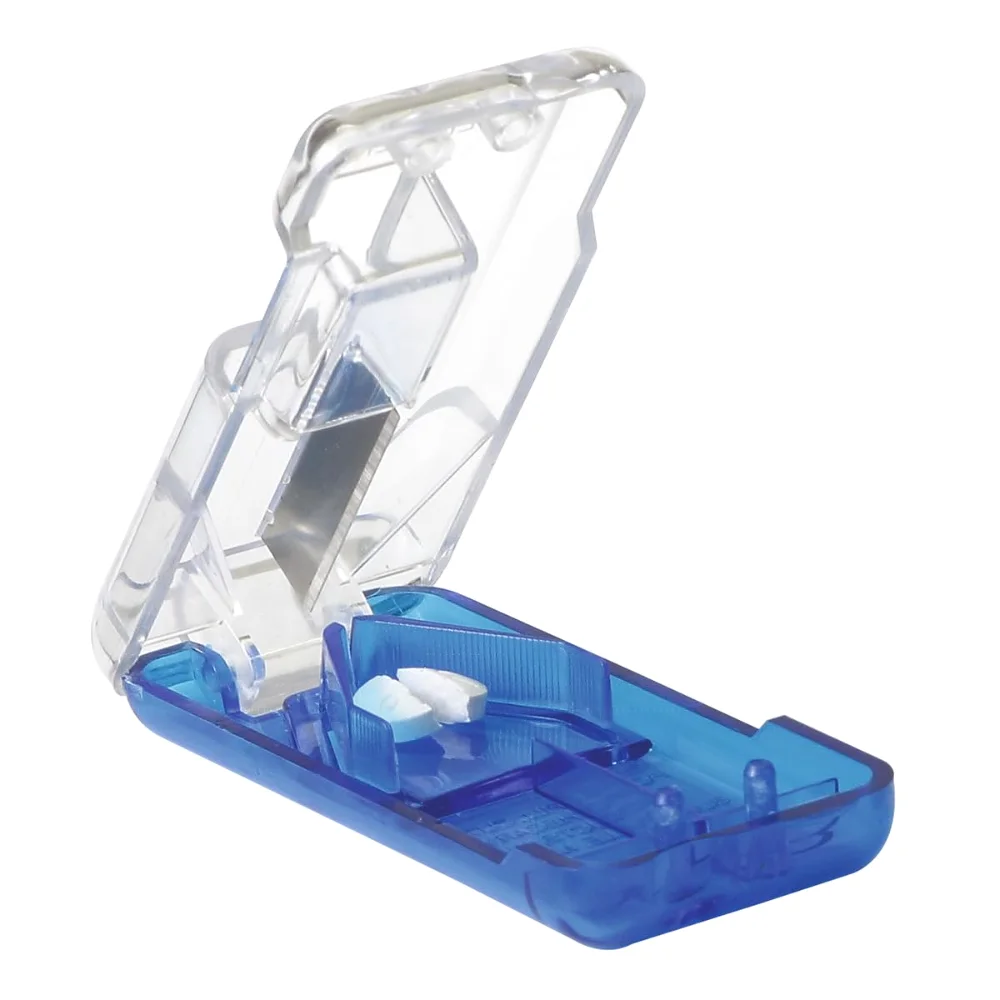
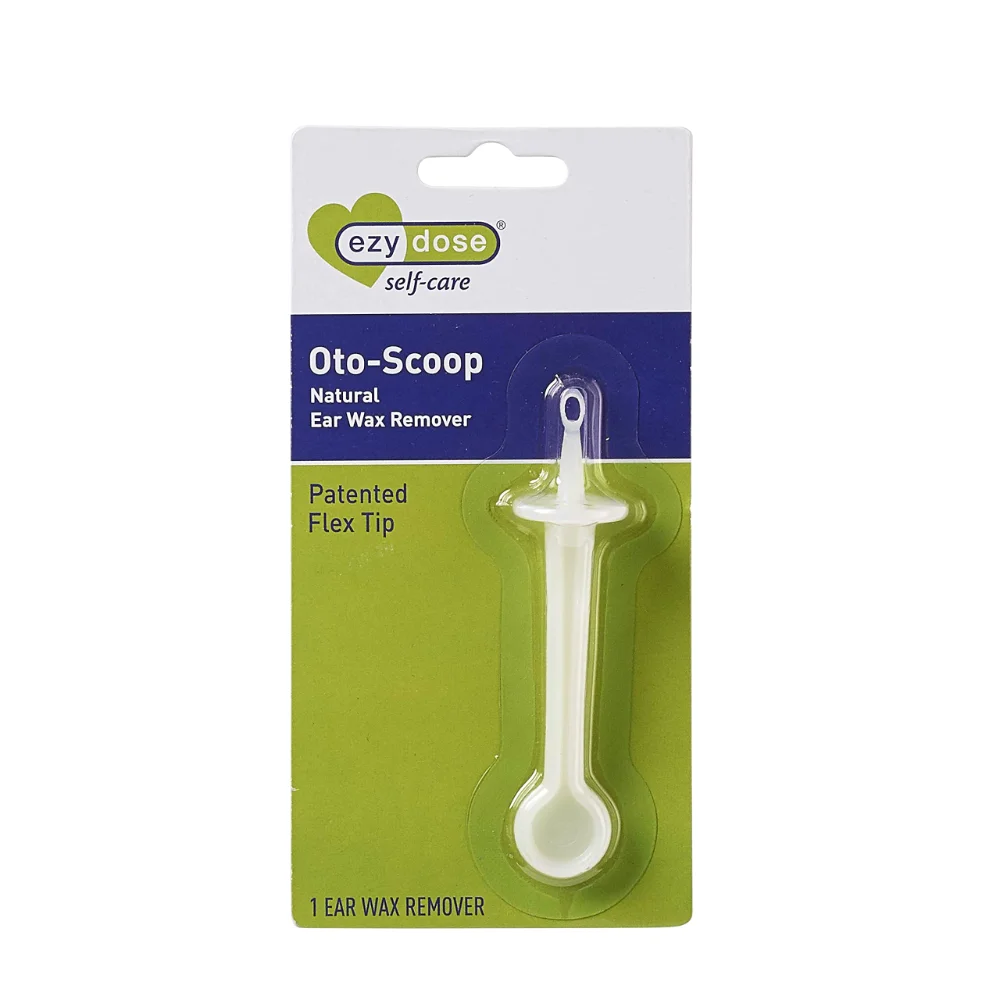
A stainless blade, a cradle that holds the tablet square, and a compartment to catch both halves. The safety-shield cutter keeps a thumb off the blade; the dispenser cutter tips the halves into a chamber you pour from.
A tablet goes in the cup, the lid turns, and a ridged face grinds it fine enough to stir into yoghurt. The Cut N Crush cuts, crushes and stores in one tool; the three-compartment crusher keeps the next two doses in its base.
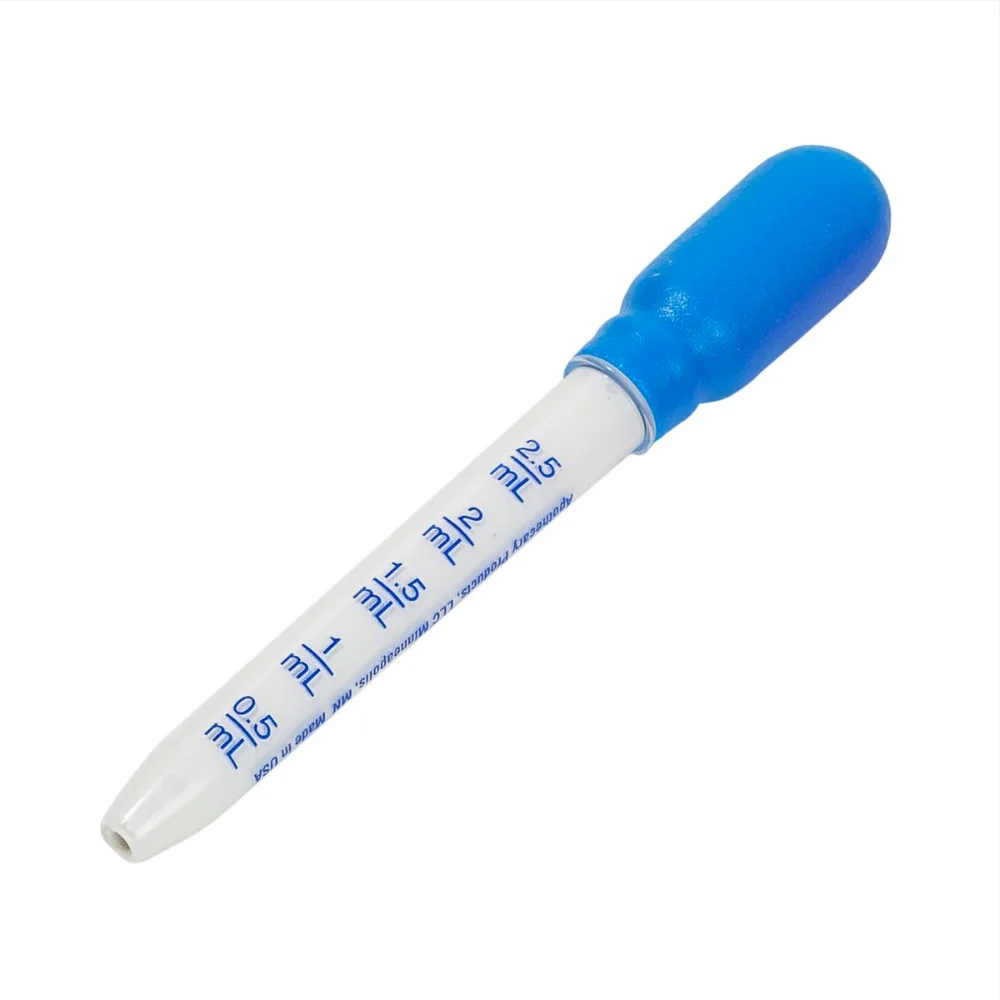
The dose a pharmacist writes is in millilitres, and so is this barrel: 5 or 10 mL, a bottle adapter that draws it straight from the bottle, and a tip that goes into the cheek. The tool the NIH study calls the most accurate there is.
12Before you click
The commonest mistake is a Large box for a schedule with a fish-oil capsule in it. Count these six once and the Ezy Dose catalogue turns into a filter.
One dose a day is a weekly box. Two is AM/PM. Three or four is a Medtime tray. A box with fewer rows than the schedule has lines gets a second box beside it within a month.
Three small tablets fit a Medium. Add a multivitamin and you want a Large. Add a capsule and the lid on a Large stops closing: XL or 2XL. The 3XL closes over anything a pharmacist hands out for a day.
If a fingernail under a snap lid is a struggle, the push-button line is the one, and the Arthritis Foundation lists which sizes it has certified.
If it is you, a weekly box refilled on Sunday. If it is a daughter on the first of the month, the 31-day case numbered by date, so nobody needs a calendar beside it.
A pop-out tray lets Wednesday go in a pocket. A pouch with a name on the strip goes further. A moisture-proof case goes to the beach.
No organizer with snap or push-button lids is child-resistant. In a house with small children the box lives up and away, and the bottles it is filled from live in the lockbox.
13In their words
Real reviews of our organizers and tools, shown as they came, with the box each one names linked underneath. Two of them are complaints, and those are the two worth reading twice.
★★★★★
I really appreciate the ability to remove each day’s worth of pills from the tray. Didn’t think I’d need that feature but now I love it. It’s just a tad bit easier than lugging around the whole tray and it makes enough of a difference to be truly useful. Lots of room. I take at least 6 large veggie capsules, a medium sized one and a couple 50mg tabs a day. Each section will hold 6 large capsules relatively easily. I don’t have a day and night routine so I load 5 of the large ones in the nighttime side and the other large and smaller ones in the daytime side. Still plenty of room. Way better than my old standard organizer that wouldn’t even hold a single large one without cramming it in there.
on Ezy Dose Weekly 7-Day AM/PM Pill Organizer, push button, Small
★★★★☆
I use these pill cases everyday. I have one for the morning and one for the night, they open easily, they’re durable, and because the plastic is clear on one side and black on the other, it is easy to tell my day and night pills apart which was previously a problem. It’s a little large, but that’s not too bad. Once you find a place to keep it. When stuffed in a bag with other stuff, no matter what I do it pops open when I travel. So I keep it in a gallon baggie to keep my pills from running away. Great value, great product, will buy again when mine wears out.
on Ezy Dose Weekly 7-Day Pill Case, AM/PM, push button, Large
★★★☆☆
Pill minder came fast and looked like advertised. Unfortunately they didn’t hold up very well. They hold a great deal of pills, but they do not stay closed if bumped meaning the great number of pills are now in the bottom of my drawer. Unfortunately with supplements they don’t have recognizable features so I had to toss them and start over. I will mention that I bought 4 and two are pretty good, while the other two are coming apart. I fill them once every 28 days so I got about 6 months out of the two bad ones. They do hold a good amount of pills. About 14 large capsules.
★★★★★
My 95 year old dad loves this pillbox. It replaced another one I had bought that was adequate but not optimal. The daily compartment doors opened too easily and the whole unit wasn’t that sturdy. Each compartment locks when you push down on it and a little tab attached to the front of each compartment allows it to pop open when the tab is pushed down. Each strip, the AM & PM, can be pulled out of the base and used independently, if needed. The black and clear colors help differentiate between morning and night pills, something my dad really likes.
on Ezy Dose Weekly 7-Day Pill Case, AM/PM, push button, Large
★★★★★
I was having a Goldilocks moment with pill organizers. I don’t have any dexterity issues, and I don’t take any medication. I needed these for supplements that I never remember to take unless they’re right in front of me. The small size was too small for all the capsules. The large size was way too big. These medium ones are perfect for my needs, fits 5 large capsules and 1 tiny capsule with enough room left for a small iron pill or something. The box is sturdy and opens easily. The letters on top will wear off over time, but that doesn’t bother me.
★★★★★
I have tried a knife and just using my fingers and, while those methods do work, they don’t work consistently. Sometimes the pills just crumble completely and that obviously isn’t the outcome needed. I purchased this pill cutter and it has worked perfectly every single time I have used it so far. I like that it is small and will travel well. It looks nice and isn’t a big tacky contraption. I like that if I need to store the pills during cutting there is space for that. I don’t mind that it’s plastic, the metal blade is doing all of the cutting work.
★★★★★
Pros: easy for me to use, even with bad hands. I feel like it’s accurate without risk of wasting expensive medicine. Easy to put the connector into the top of the medicine bottle and makes a good seal. Connector has an easy cap so you can put medicine in the cabinet without having to put the regular top back on, but NOT child or spill safe. Kids’, pets’, adults’ meds.
on Ezy Dose Baby Oral Syringe & Dispenser Calibrated for Liquid Medicine
14Longer reads
How to pick a size that closes over your capsules, what the label has to say before a tablet is halved, why a child’s dose is written in millilitres, and how a monthly case runs a house where the filler and the taker are two people.
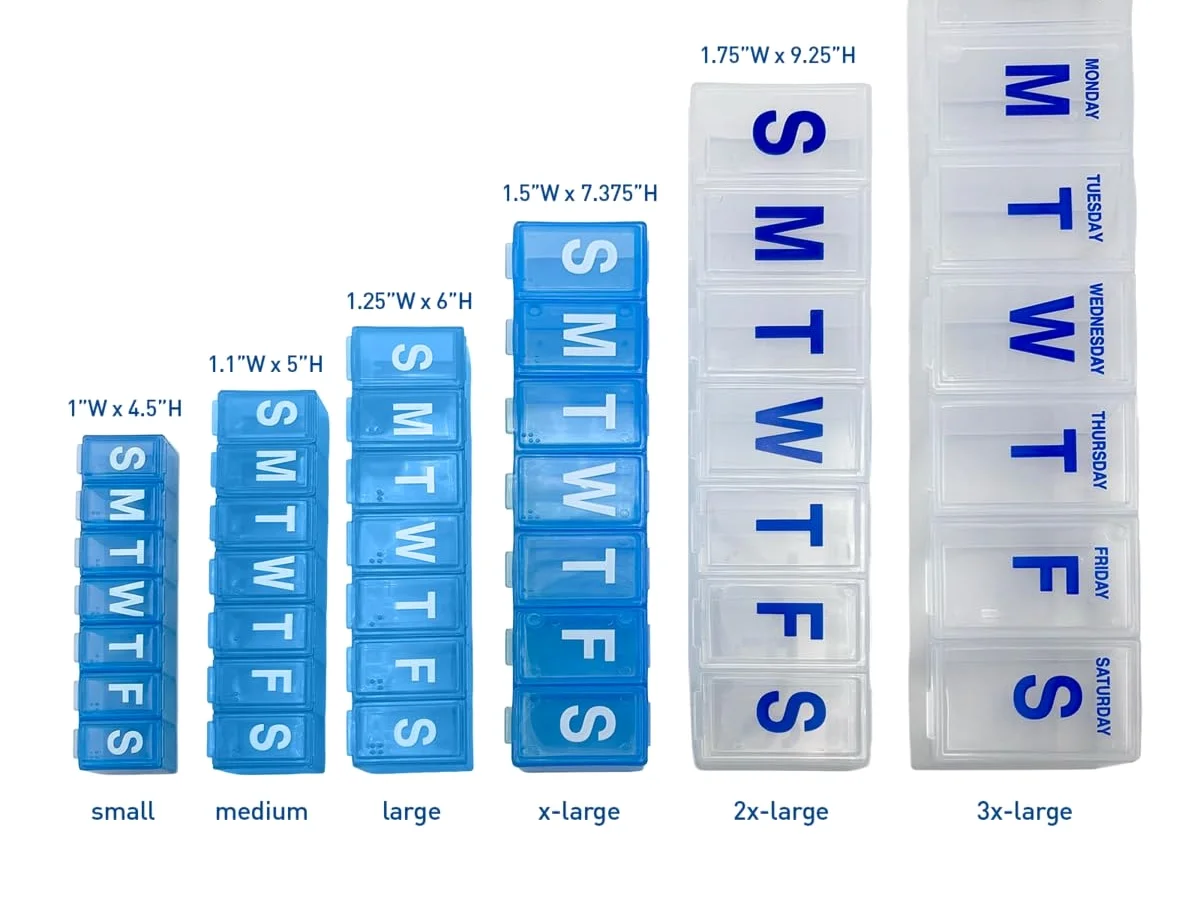
The lid that will not shut on the first Sunday a fish-oil capsule joins the schedule is the commonest complaint we hear. What each size actually holds, how to count a dose, and when a second box beats a bigger one.
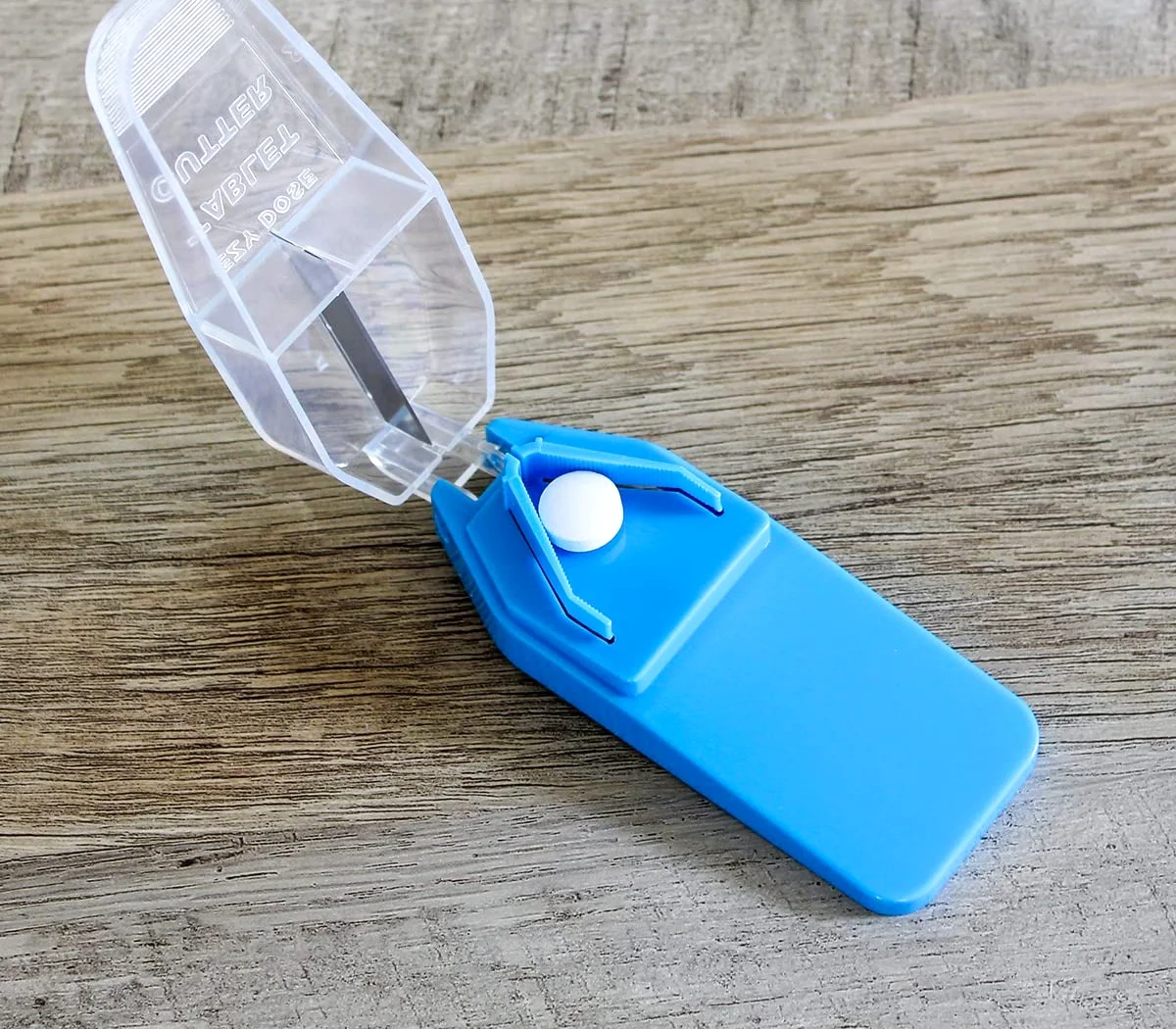
A pill cutter halves what it is given. Whether the tablet may be halved is written in the label and known to the pharmacist, and the list of tablets that must never be split or crushed is longer than most people expect.
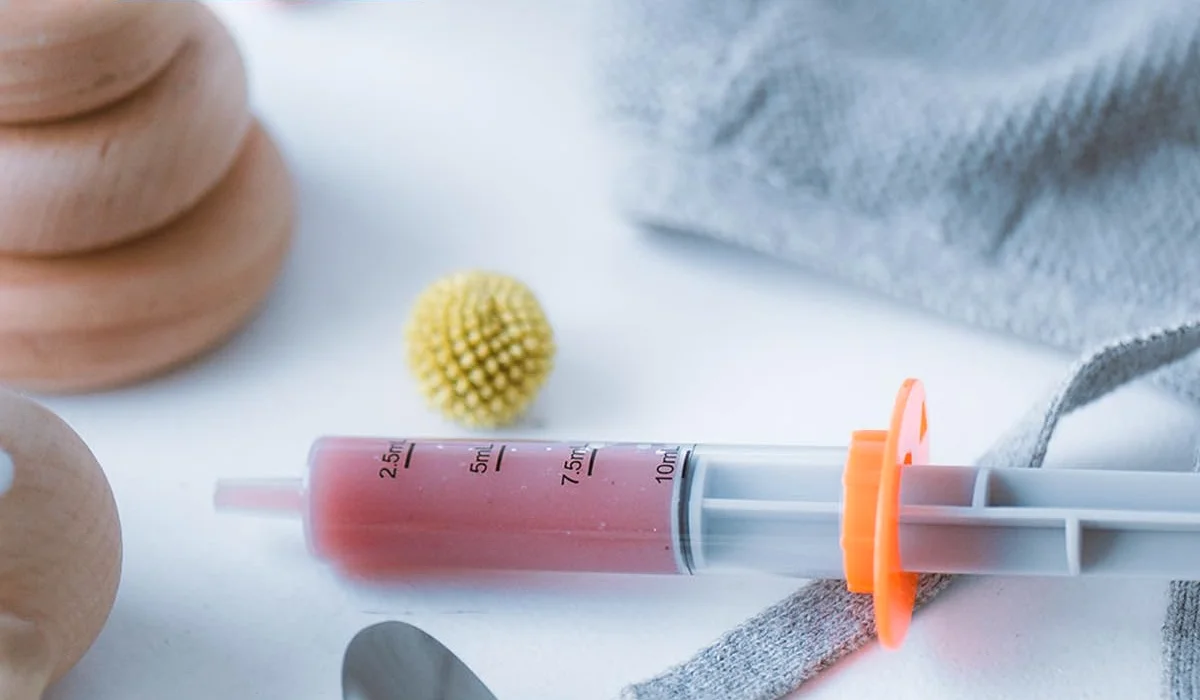
A flatware teaspoon holds anything from 2.5 to 10 mL, and the dose on the bottle is written in millilitres. How an oral syringe, a bottle adapter and a spoon-dropper turn the label into the amount that goes in.
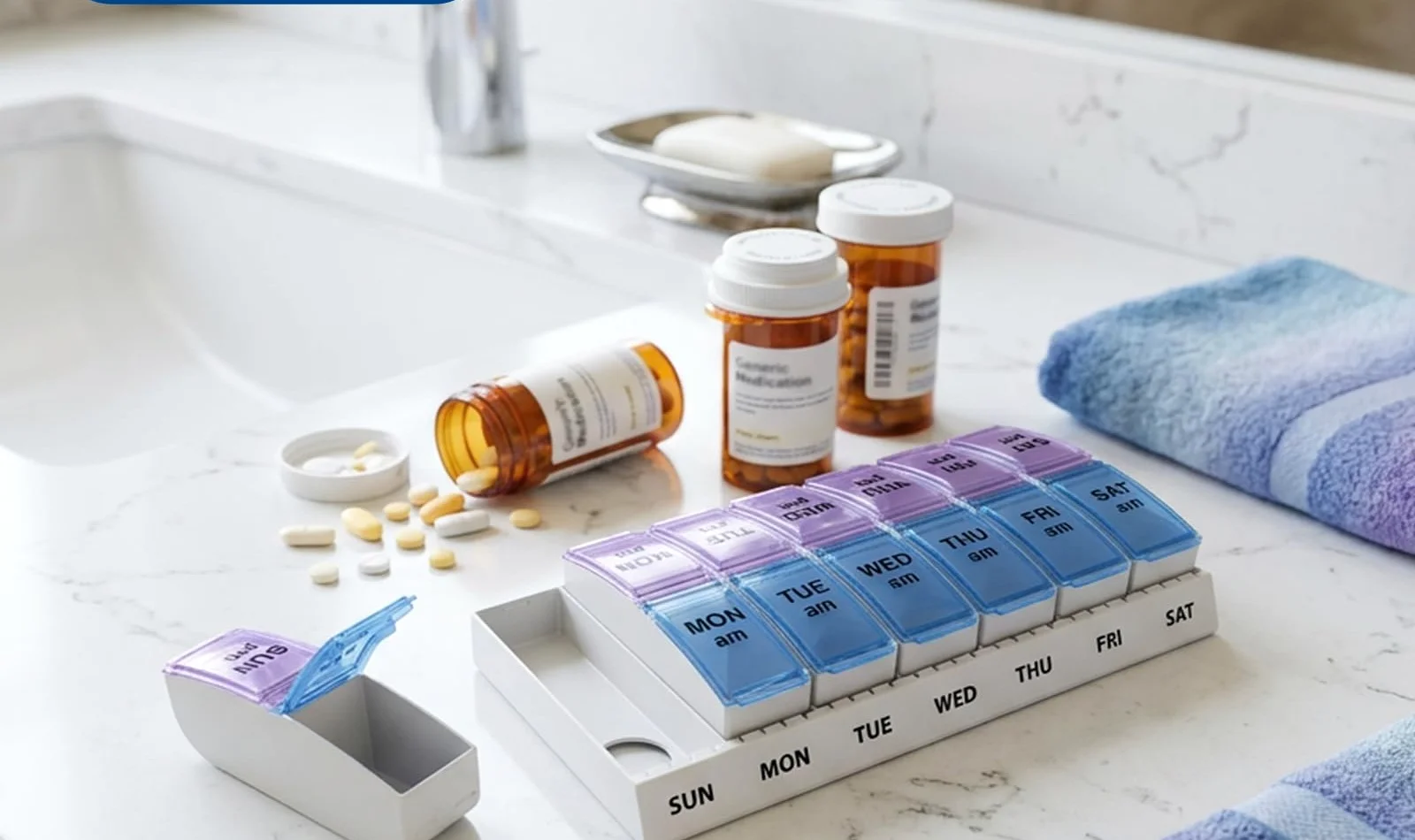
When the daughter fills the box and the father takes from it, the organizer is a message between two people. How to set up a 31-day case, what to write down beside it, and where the lockbox comes in.
15Questions people send us
Seven of them, answered here in a paragraph each. Longer answers live on the shelf pages and in the guides.
Every buying button on this site opens the organizer, cutter or syringe you were looking at, in stock, at our retail partner. That is where the payment, the delivery and any return happen, and the price you see there is the price you pay.
If you would rather see the whole range in one place, the button at the foot of every page opens the catalogue rather than a single box.
Count the lines on your schedule. One dose a day is a weekly box with seven lids. A morning dose and an evening dose is an AM/PM box, fourteen lids in two colours. Three or four doses a day is a Medtime tray with a row for each. A month filled in one sitting, usually by someone else, is the 31-day case. The size is the second decision, and it depends on how much goes into one compartment rather than on how many compartments there are.
Count what goes into a single dose. Two or three small tablets fit a Small or a Medium. Add a multivitamin and you want a Large, which is the size most people end up with. Add a fish-oil capsule or a calcium tablet and the lid on a Large stops closing cleanly, and XL or 2XL is the honest answer. The 3XL holds up to sixty aspirin-sized tablets in one slot, which in practice means anything a pharmacist hands out for one day.
That is what the button is for. A snap lid needs a fingernail under its edge; the push button takes a press from the side of a thumb and the lid rises on its own, and the rounded compartment floor tips the tablet toward your fingers. The Arthritis Foundation lists the push-button weekly in XL and 2XL, the daily AM/PM push-button box and the Medtime tray as Ease of Use certified, and the link to their page is on the sources at the foot of this site.
The tool cuts and the tool crushes; whether your tablet may be cut or crushed is a question for the pharmacist and the label. FDA says splitting is approved only when the prescribing information says so, and extended-release, enteric-coated and a few other tablets must not be split or crushed at all, because the coating or the slow release is the point. Ask first, then buy the cutter with the shield if a thumb should never meet the blade.
No organizer with snap or push-button lids is child-resistant, and neither are the pouches or the travel cases. They belong up and away and out of sight, the way the medicine did in its bottle; a child can be into a box in under a minute. For a house with small children the locking pill container and the medication lockbox close with a combination, and the Poison Help number, 800-222-1222, belongs in every phone before it is needed.
Because a kitchen teaspoon is not a unit: a flatware spoon holds anything from 2.5 to 10 mL. The dose on a child’s medicine is written in millilitres, and an NIH-funded study found that parents who thought in teaspoons had twice the odds of a dosing error. The syringe barrel is marked in mL, the plunger stops on the number the pharmacist wrote, and the bottle adapter draws the dose without pouring.
Every Ezy Dose size, every lid, every colourway
Every size, lid and colourway in the Ezy Dose shelves sits behind this button, with the figures from our last update against each one.