Filling a monthly pill organizer for someone else, and keeping it honest
When the daughter fills the box and the father takes from it, the organizer is a message between two people. How to set up a 31-day case, what to write down beside it, and where the lockbox comes in.
This page is general information about medication tools, not medical advice. Whether a tablet may be split or crushed, how much of a medicine to give and what to do about a missed dose are questions for the pharmacist who filled the prescription and the doctor who wrote it.
When the person who fills the box and the person who takes from it are two different people, the organizer stops being a container and becomes a message. A daughter fills thirty-one compartments on the first Sunday of the month; her father opens one each morning for the next four weeks; and the box, read from across the kitchen on a Thursday, tells each of them what the other has done. Setting that message up so it stays true takes one Sunday a month and a list.
Why a month, and why by date
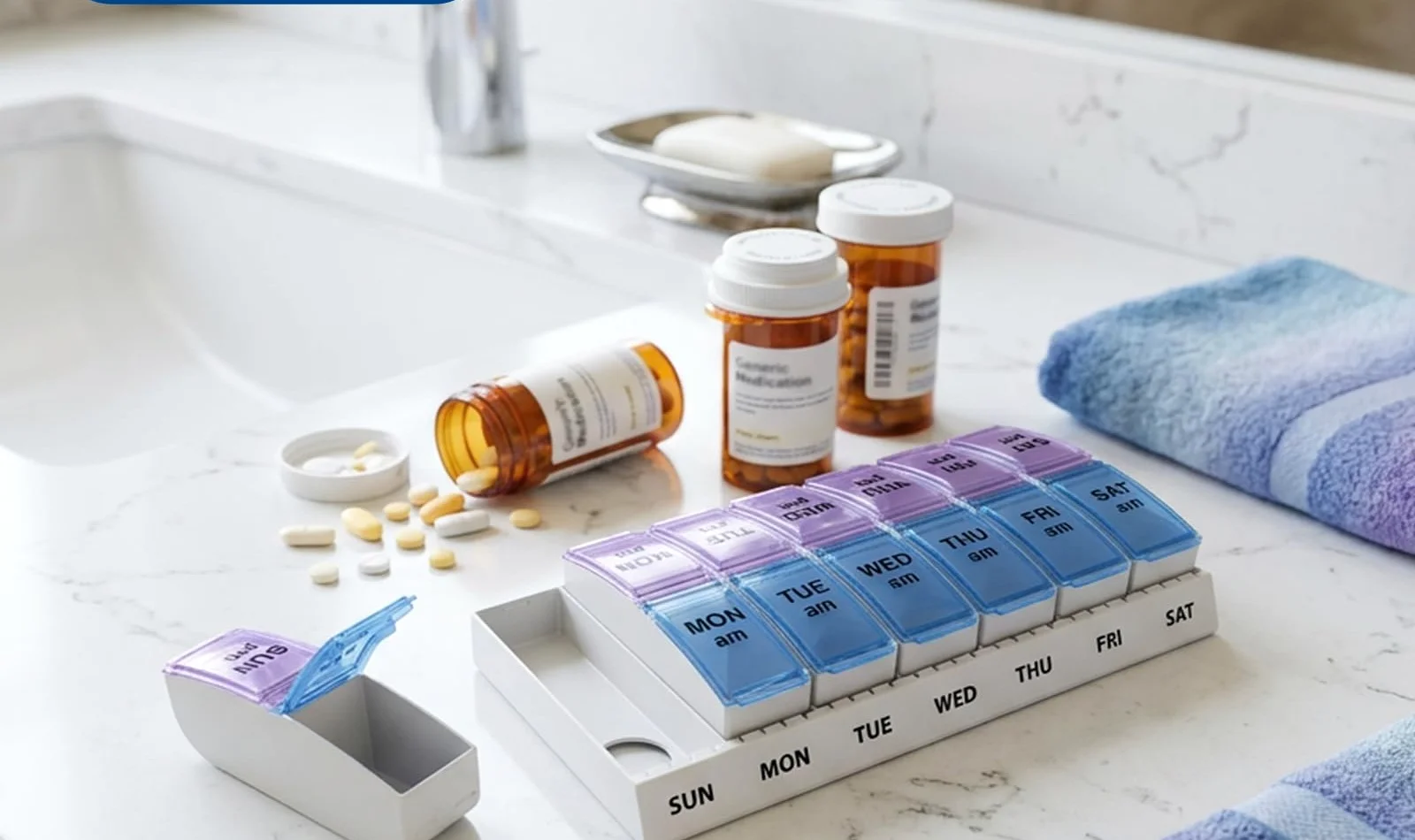
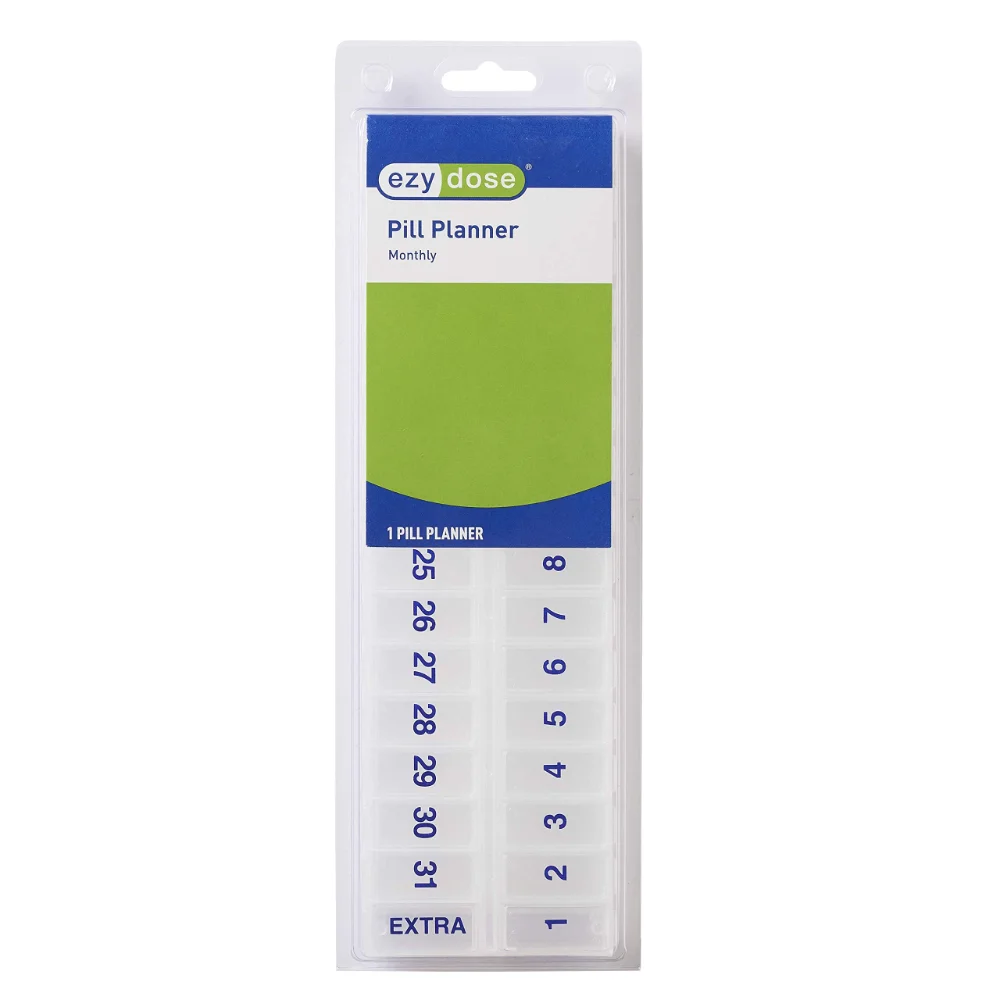
A weekly box needs a filler every Sunday, which is fine when the filler lives in the house. When the filler lives across town, seven days is a visit a week, and a missed visit is an empty box on a Monday. The monthly cases exist for that gap. The 31-day case has a compartment for every date, the 28-day box has four rows of a week, and the 14-day organizer splits into two detachable weeks for a household that can manage a visit a fortnight.
Numbering by date is the detail that matters. A compartment labelled 15 is the fifteenth whatever day of the week that falls on, so the person taking from it needs no calendar beside the box and no memory of which week it is. On a weekly box the question "is today Tuesday" has to be answered by someone; on a dated box the question does not arise. Every monthly case in our range is a Large compartment, which takes a multivitamin and two or three tablets together; if a day has more in it than that, the answer is two boxes rather than a bigger one, and that is covered below.
Set the table before you open a bottle
Lay the bottles out in the order they are taken, morning first, and put the box in front of them with the lids open. Then write the list. FDA's advice to older adults is to keep a written list of every medicine and supplement, with the dose and the time, and to share it with every doctor and pharmacist; the list beside the organizer is the same list, and it is the thing that makes the box checkable by somebody else. Name, strength, how many, when, and any note the pharmacist gave: with food, not with grapefruit, may be split, must not be crushed.
Fill one bottle at a time, all thirty-one compartments, then the next bottle. Filling by bottle rather than by day means a bottle that runs out on the twentieth is noticed on the twentieth, not discovered as an empty corner of a compartment on the twenty-fifth. It also means the count can be checked at the end: thirty-one tablets out of the bottle, thirty-one compartments with one in each.
Close the lids as you go, not at the end. An open tray with thirty-one loaded compartments is one elbow away from being a floor.
Check it twice, and let the box do the second check
The first check is yours, at the table: the list says three items a day, so every compartment should show three shapes. Run a finger along the row and look for the compartment with two. The second check is the box's, over the month: a compartment that is still full on the sixteenth is a missed dose, visible to anyone who walks past, and that is the whole reason the lids are clear.
What the box cannot do is tell you what to do about the missed dose, and neither can we. FDA is plain that a dose should not be skipped or a medicine stopped without asking a health care professional, and the same professional is the one to ask about a dose found untaken a day late. Put the pharmacist's number on the list.
When one box is not enough
Two situations break the one-box plan, and both are solved with a second box rather than a bigger one.
The first is a day with more in it than a Large compartment will hold: a multivitamin, a fish-oil capsule, a calcium tablet and three prescriptions. Split the schedule, not the compartment. Put the prescriptions, the ones that must not be missed, in the monthly case, and the supplements in a weekly box beside it; the important box then shows a missed dose without the noise of the supplements around it. The guide on organizer sizes has the arithmetic.
The second is a schedule with a morning and an evening dose. A monthly case is one compartment a day. For two doses a day the honest answer is two monthly cases, one labelled AM and one PM, or an AM/PM weekly box with a filler who can visit weekly. A single compartment holding both doses cannot show which one was taken, and a box that cannot show that has lost its point.
The bottles, the children, and the lockbox
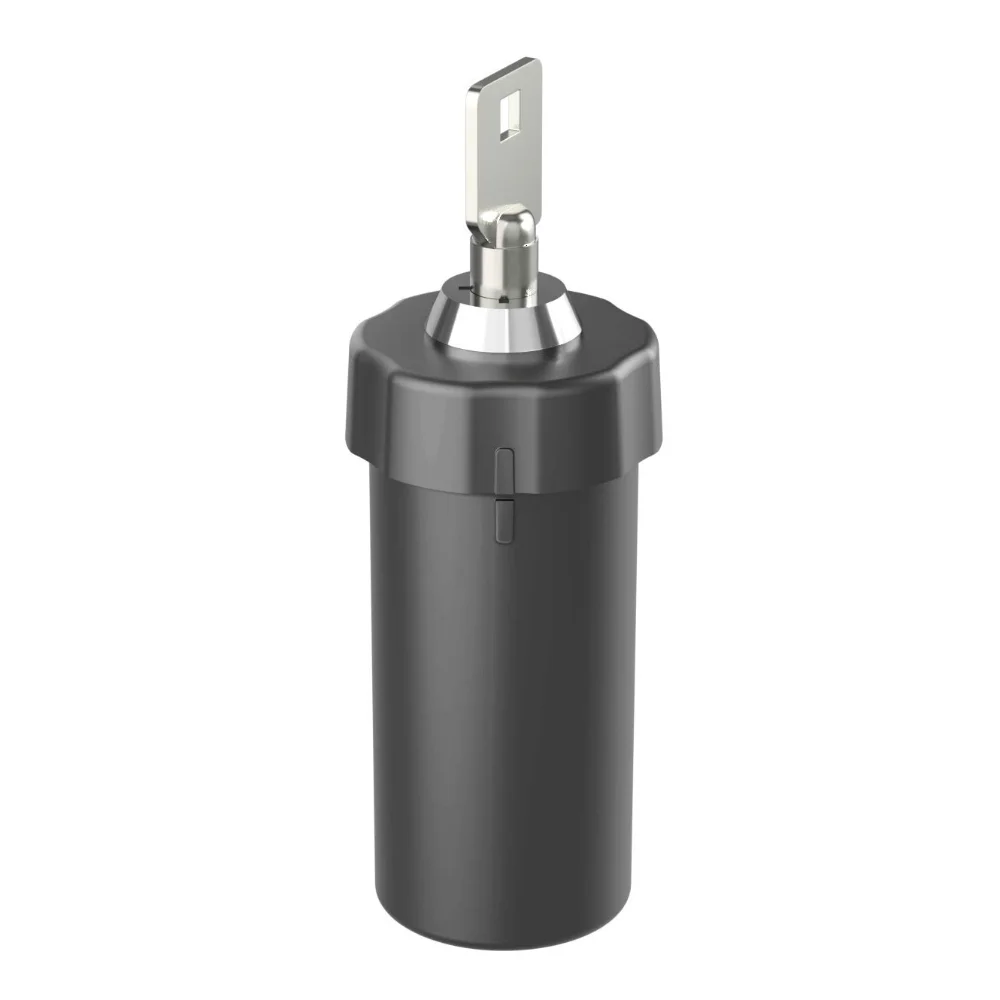
Once the box is filled the bottles go away, and where they go depends on who else is in the house. If grandchildren visit, the answer is the medication lockbox: a clear box with a combination in the lid that holds several standard bottles standing up, so the month's supply is behind a code while the day's dose sits in the organizer on the counter. The CDC's rule for medicines in a house with children is up and away and out of sight, every time, with the child-resistant cap treated as a delay rather than a guarantee; a lockbox is what that rule looks like for the bottles that matter most.
The organizer itself is not child-resistant, and it should not be pretended to be. A monthly case with snap lids opens for a curious four-year-old as easily as for a grandfather. It lives high, and it lives where the grandfather can still reach it, which in most kitchens is the shelf above the kettle rather than the counter beside the door. Poison Help is 800-222-1222; the CDC asks that it be programmed into every phone, and the list beside the box is a good place to write it as well.
Two weeks at a time, and the pouch for the days away
Not every household can manage a monthly visit, and not every schedule survives one. The 14-day organizer is the middle answer: two detachable weeks, so the first sits on the counter while the second stays sealed in a drawer, and the visit is a fortnight apart rather than a month. It also suits a parent who is steady enough to fill a week but happier with two weeks done at once.
For a hospital appointment, a weekend at a sibling's house or a week in respite, the pouches come out. Fill one per dose, write the day, the time and the name on the white strip, and the doses travel without the box; a nurse or a relative reading the strip needs no explanation. The 400-count refill is sized for exactly this household: at two pouches a day it is two hundred days of doses from one box.
The routine, once it runs
First Sunday of the month, bottles on the table in order, list checked against the new prescriptions, fill by bottle, close as you go, count the compartments, bottles into the lockbox, box onto the shelf above the kettle. Mid-month, a phone call and a question: is the fifteenth empty. It is a ten-minute job once it is a routine, and it is the ten minutes that let two people who do not live together keep one schedule honest.
More of this sort of thing is in the guides, and we at Ezy Dose keeps the whole range one click away on the front page.